Categories
India Journalism

WhatsApp Users Spread Antivaccine Rumors in India

2019 04 15 whatsapp vaccine india

That’s the headline on my latest story, out Saturday. It begins:

Antivaccine misinformation, some of it from social media posts in the West, is spreading in India on WhatsApp, undermining efforts to root out measles and rubella in a country where tens of thousands of people are struck by the diseases each year.

Click through to read the rest.

Categories
India Journalism

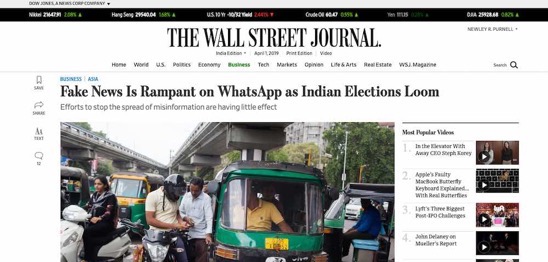
Fake News Is Rampant on WhatsApp as Indian Elections Loom

2019 04 01 whatsapp india

That’s the headline on my newest story, out yesterday. It begins:

NEW DELHI — In India, viral fake news is lighting up Facebook Inc.’s WhatsApp messaging app as the world’s biggest democracy prepares for national elections in the coming weeks.

Efforts by WhatsApp and the government to stop the spread of misinformation are having little effect, according to fact-checking groups and analysts.

That is a challenge for Facebook, as well as policy makers and voters grappling with digital falsehoods in India, a country of 1.3 billion people where mobile internet access has exploded in recent years.

It also provides a unique window on how Facebook Chief Executive Mark Zuckerberg’s surprising strategic shift from public postings to private messaging could play out around the world. Mr. Zuckerberg said in March that Facebook would move to a model favoring encrypted group chats like those on WhatsApp, which is popular in emerging economies including Brazil and Indonesia.

India is WhatsApp’s biggest market. Research firm Counterpoint estimates it has 300 million users, making it bigger here than Facebook. WhatsApp hasn’t released user figures since February 2017, when it said it had 200 million users in India. Since then, plummeting prices for mobile data and inexpensive smartphones have made WhatsApp the default digital town square in a country with deep societal divides.

Click through to read the rest.

Categories
Journalism Travel

‘Rick Steves Wants to Set You Free’

2019 03 25 travel

Rick Steves is absolutely American. He wears jeans every single day. He drinks frozen orange juice from a can. He likes his hash browns burned, his coffee extra hot. He dislikes most fancy restaurants; when he’s on the road, he prefers to buy a foot-long Subway sandwich and split it between lunch and dinner. He has a great spontaneous honk of a laugh — it bursts out of him, when he is truly delighted, with the sharpness of a firecracker on the Fourth of July. Steves is so completely American that when you stop to really look at his name, you realize it’s just the name Rick followed by the plural of Steve — that he is a one-man crowd of absolutely regular everyday American guys: one Rick, many Steves. Although Steves spends nearly half his life traveling, he insists, passionately, that he would never live anywhere but the United States — and you know when he says it that this is absolutely true. In fact, Steves still lives in the small Seattle suburb where he grew up, and every morning he walks to work on the same block, downtown, where his parents owned a piano store 50 years ago. On Sundays, Steves wears his jeans to church, where he plays the congas, with great arm-pumping spirit, in the inspirational soft-rock band that serenades the congregation before the service starts, and then he sits down and sings classic Lutheran hymns without even needing to refer to the hymnal. Although Steves has published many foreign-language phrase books, the only language he speaks fluently is English. He built his business in America, raised his kids in America and gives frequent loving paeans to the glories of American life.

And yet: Rick Steves desperately wants you to leave America.

That’s just one of the many fantastic passages in Sam Anderson’s profile of travel guru Rick Steves, just out in the New York Times Magazine.

Very much worth a read.

Categories
India Journalism

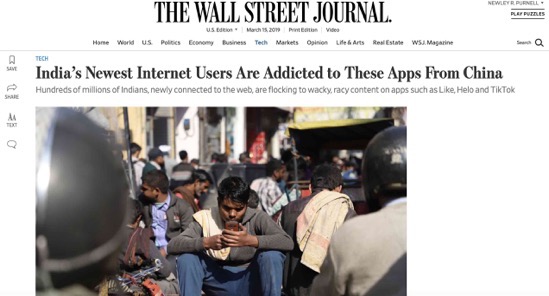
India’s Newest Internet Users Are Addicted to These Apps From China

2019 03 15chinese apps

That’s the headline on my latest story, out yesterday. It begins:

NEW DELHI—Some of China’s quirkiest social-media firms are signing up hundreds of millions of consumers in India, tech’s biggest untapped market, looking to capture users who aren’t already locked into Facebook , Twitter or other American apps.

Chinese content-sharing apps such as Bigo Inc.’s Like and Bigo Live, along with Bytedance Ltd.’s Helo and TikTok, are taking off in this country of 1.3 billion, where most people are getting online for the first time using low-cost smartphones and dirt-cheap data plans. These apps, with ad-supported models, feature hours and hours of mostly wacky and often titillating content: brief videos of slapstick gags, girls blowing kisses, patriotic songs, teens twerking to the latest Bollywood hits and more.

Their simple interfaces appeal to users such as Asha Limbu, a 31-year-old from the northeastern state of Manipur who works as a housekeeper in New Delhi. In between doing housework for a middle class family, Ms. Limbu spends three hours a day on Like, scrolling through hundreds of tiny videos in a sitting and connecting with friends and strangers along the way.

“Facebook is boring,” she said. She has heard of Twitter and Instagram but never tried them.

Click through to read the rest.

Categories
India Journalism

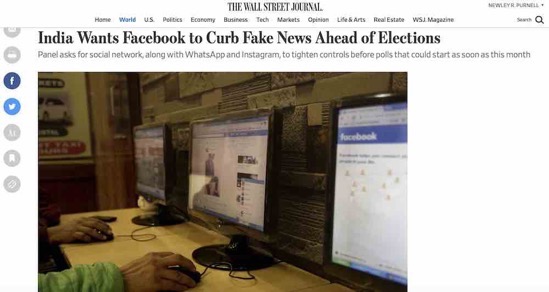
India Wants Facebook to Curb Fake News Ahead of Elections

2019 03 08facebook india fake news

That’s the headline of my most recent story, which I wrote with my colleague Rajesh Roy. It begins:

NEW DELHI—India is pushing Facebook Inc. to do more to combat fake news ahead of coming national elections, underscoring global scrutiny on the social-media titan.

A closed Indian parliamentary panel on Wednesday asked Joel Kaplan, the company’s global policy chief, to ensure the social network, its WhatsApp messaging service and its photo-sharing app Instagram wouldn’t be abused as the world’s biggest democracy goes to the polls. India’s election commission is expected to announce soon that the elections will begin in March or April.

“We discussed the challenges faced with these platforms, especially with regard to data security and citizens’ privacy,” Anurag Thakur, a parliamentarian from the ruling Bharatiya Janata Party who heads the panel on information technology, told The Wall Street Journal.

Click through to read the rest.

Categories
Journalism Tech

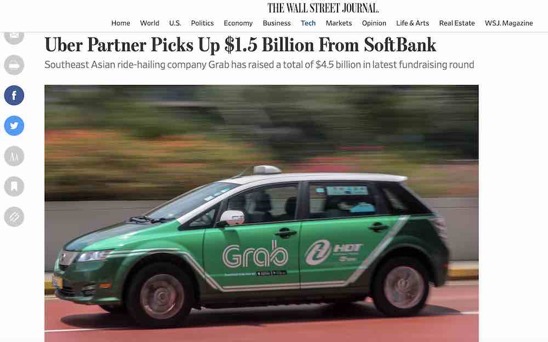
Uber Partner Picks Up $1.5 Billion From SoftBank

2019 03 08grab

That’s the headline on a story out Wednesday that I wrote with my colleague Saurabh Chaturvedi. It begins:

SINGAPORE—Southeast Asian ride-hailing company Grab Holdings Inc. has raised $1.46 billion in fresh funding from Japan’s SoftBank Group Corp., which it will use to fuel its expansion beyond transportation services.

That brings the total from Grab’s latest fundraising round, over the past year, to more than $4.5 billion, the company said Wednesday. The SoftBank investment is through the conglomerate’s Vision Fund, which has stakes in some of the world’s most valuable tech companies.

Click through to read the rest.

Categories
India Journalism Tech

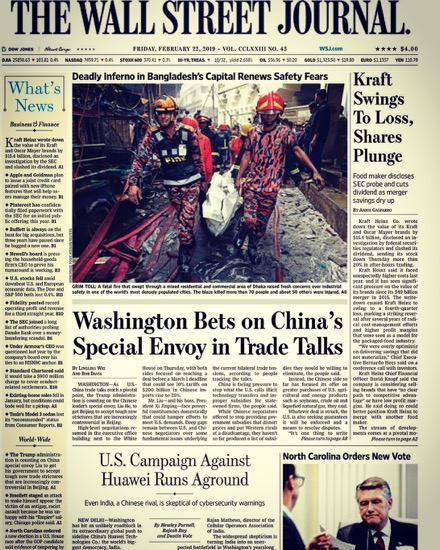
My Latest Page One Story: U.S. Campaign Against Huawei Runs Aground

IMG 1359

That’s the headline on a Page One story I wrote with my colleagues Rajesh Roy and Dustin Volz. It ran online Thursday and in Friday’s paper.

It begins:

Washington has hit an unlikely roadblock in its extraordinary global push to sideline China’s Huawei Technologies Co.: the world’s biggest democracy, India.

Policy makers and telecommunications firms here are so far largely unpersuaded by U.S. warnings that using Huawei’s equipment to upgrade India’s telecom networks presents a major cybersecurity threat, according to more than a dozen government officials and industry executives. Many argue that any such risk is outweighed by Huawei’s cut-rate prices and technological prowess.

Click through to read the rest.

Categories
Journalism Newley's Notes

NN 164: #IndiaTechLash; Super Bowl Roundup; Slack IPO; Golden Retrievers Sledding

2019 02 12 building

Hi, friends. Welcome to the latest edition of Newley’s Notes.

⚠️ Last week I wrote a story about a trend I’ve mentioned before: India’s government pushing back against U.S. tech titans. Maybe I’ll call it #IndiaTechLash. (Got a better phrase? Hit me up.)

The hedline of a story Tues. I wrote with a colleague: Amazon, Facebook and Walmart Need to Watch Their Backs in India.” The lede:

Hoping to match China’s success at protecting and promoting homegrown tech titans, India has plans to continue tightening restrictions on Amazon.com Inc., Walmart Inc., Facebook Inc. and other foreign firms that have come to dominate the country’s budding internet economy.

⚡ And it contained this scoop (scooplet?):

The secretary of India’s Telecommunications Department, Aruna Sundararajan, last week told a gathering of Indian startups in a closed-door meeting in the tech hub of Bangalore that the government will introduce a “national champion” policy “very soon” to encourage the rise of Indian companies, according to a person familiar with the matter. She said Indian policy makers had noted the success of China’s internet giants, Alibaba Group Holding Ltd. and Tencent Holdings Ltd. , the person said. She didn’t immediately respond to a request for more details on the program or its timing.

Meanwhile, remember the new e-commerce regulations I’ve written about? Well, they’ve come into effect. The hed on a story by a colleague Fri.: Products Yanked from Amazon in India to Comply With New E-Commerce Rules.

🔮 As they say: Watch this space.

Here are ten items worth your time this week:

💬 1) Slack Files to Go Public With Direct Listing [WSJ]

“The workplace-messaging company’s IPO could come as soon as this spring, people familiar with the matter have said. By the time it debuts, Slack could be valued well above $7 billion, the level at which it recently raised money. ”

🔍 2) Huawei Sting Offers Rare Glimpse of the U.S. Targeting a Chinese Giant [Bloomberg BusinessWeek]

“Like all inventors, Khan was paranoid about knockoffs. Even so, he was caught by surprise when Huawei, a potential customer, began to behave suspiciously after receiving the meticulously packed sample.”

🏈 3) New England Patriots Win Super Bowl LIII [WSJ]

“Tom Brady did not have a signature game. New England did not light up the scoreboard. But the Patriots, a dynasty of nearly two decades that has revolutionized football as much as they have changed with it, beat the L.A. Rams 13-3 in Super Bowl LIII in a different type of barnburner that, despite a dearth of points, provided a nail-biting finish to the year.”

📺 4) The Super Bowl ads you will remember [CNN]

“The most memorable spots of the night are ones for brands like Budweiser and Bumble that do not just peddle products, but also sent powerful messages about issues like diversity and women’s empowerment, which are top of mind for many Americans.”

🔻 5) Super Bowl viewership sinks after a solid NFL season [Axios]

“By all accounts, Super Bowl LIII was a snoozer, and its ratings appear to reflect this.”

👪 6) Two Sisters Bought DNA Kits. The Results Blew Apart Their Family. [WSJ]

“Sonny and Brina Hurwitz raised a family in Boston. They both died with secrets.

🎤 7) Fortnite’s Marshmello concert was a bizarre and exciting glimpse of the future [The Verge]

“Even if you’re not a huge fan of electronic music or have never heard of the EDM producer Marshmello, Fortnite’s live in-game concert was still a shockingly stunning sight to behold — it was also an unprecedented moment in gaming.”

✒ 8) A Suspense Novelist’s Trail of Deceptions [New Yorker]

“I recently called a senior editor at a New York publishing company to discuss the experience of working with Mallory. ‘My God,’ the editor said, with a laugh. ‘I knew I’d get this call. I didn’t know if it would be you or the F.B.I.‘”

📲 9) This is the most brilliant iPhone app grouping I’ve ever seen… [Twitter: @arampell]

❄ 10) Dog video of the week: This should make your day a little happier [Twitter: @MGSniper]

Categories
India Journalism Tech

Amazon, Facebook and Walmart Need to Watch Their Backs in India

2019 02 01 india gate

That’s the headline on a story I wrote Tuesday with my colleague Rajesh Roy. It begins:

Hoping to match China’s success at protecting and promoting homegrown tech titans, India has plans to continue tightening restrictions on Amazon.com Inc., Walmart Inc., Facebook Inc. and other foreign firms that have come to dominate the country’s budding internet economy.

As hundreds of millions of people get online for the first time, and with national elections due in the coming months, Indian policy makers are upping the pressure on American rivals and changing policies to favor domestic players.

The secretary of India’s Telecommunications Department, Aruna Sundararajan, last week told a gathering of Indian startups in a closed-door meeting in the tech hub of Bangalore that the government will introduce a “national champion” policy “very soon” to encourage the rise of Indian companies, according to a person familiar with the matter. She said Indian policy makers had noted the success of China’s internet giants, Alibaba Group Holding Ltd. and Tencent Holdings Ltd. , the person said. She didn’t immediately respond to a request for more details on the program or its timing.

Asked about the comments, she said in a WhatsApp message that the idea is to promote Indian companies “to become global champions."

Click through to read the rest.

Categories
Journalism Tech

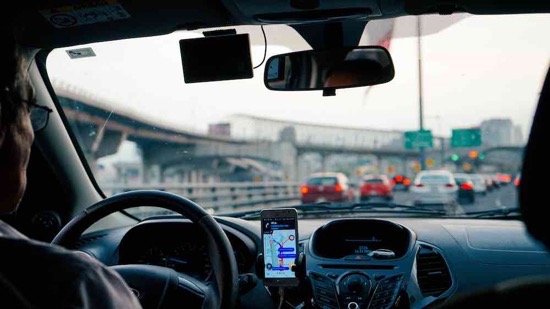
Uber Wants You to Catch the Bus or Train—if They Can Drive You There

2019 02 01 uber transport

That’s the headline on a story out Wed. that I wrote with my colleague Mike Cherney. It begins:

Uber Technologies Inc., fresh from disrupting the taxi industry and leaping into food delivery, is devising a new business strategy ahead of its anticipated public offering: ferrying passengers to and from mass-transit systems.

Last year, the ride-sharing giant created an internal team with a focus on partnerships with local transit officials, a shift for a company that previously had run-ins with regulators as it expanded around the globe. The move comes as Uber seeks to evolve from being primarily a taxi-like service to a wider transportation platform, offering options like electric bikes and scooters—and eventually public bus and train tickets.

The approach could generate significant revenue for Uber, if the company can convince customers to take more Uber trips to and from bus stops or train stations. Finding new revenue is crucial for the cash-burning giant, which has said it doesn’t expect to be profitable for at least three years and faces increasing competition as it plans for an IPO this year.

Click through to read the rest.