



I hope your holiday was full of food, friends, family, and festivities.
Ginger got a candy cane dog toy, which, because she is a #PowerChewer, lasted all of ten minutes!
I hope your holiday was full of food, friends, family, and festivities.
Ginger got a candy cane dog toy, which, because she is a #PowerChewer, lasted all of ten minutes!
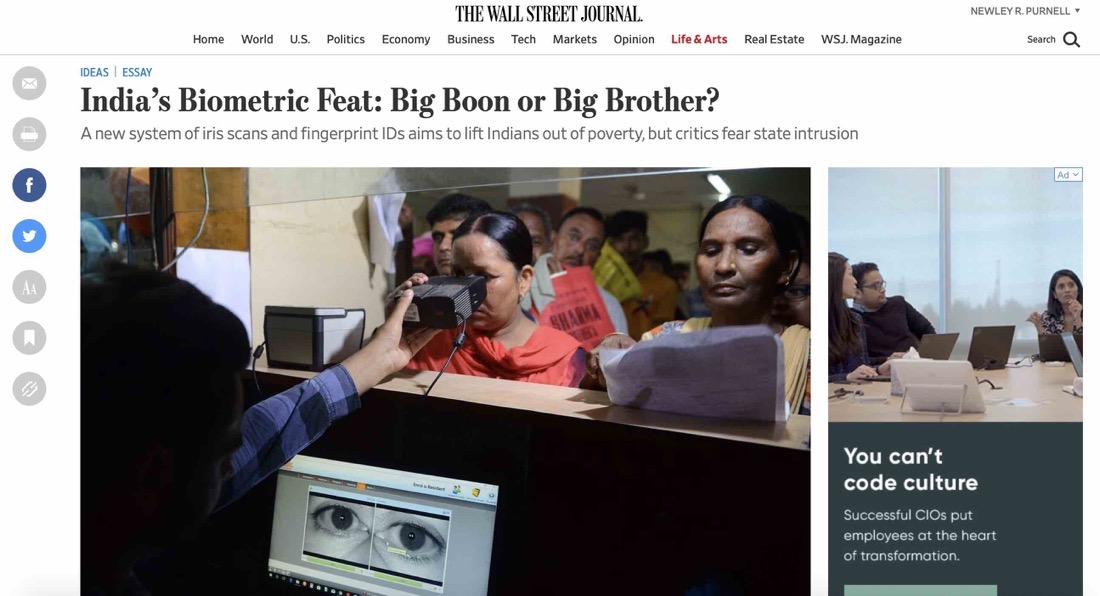
That’s the headline of my most recent story, online here and in Saturday’s print Wall Street Journal.
It begins:
Last July, after virtually every adult in India was connected to the world’s biggest biometric identity database, one of the government officials behind it issued a challenge. R.S. Sharma, who oversees the country’s telecom regulatory agency, publicly disclosed his personal ID number in the system and taunted skeptics and potential hackers. “Show me one concrete example where you can do any harm to me!” he tweeted.
Opponents of the system swarmed, looking to show the dangers of having too much information amassed in one place. They scoured the internet for Mr. Sharma’s personal data by using the ID number to help open digital doors, and claimed some prizes: They uncovered his mobile number and a photo of his daughter and were able to deposit token amounts of money in his bank account. But they couldn’t withdraw funds or corrupt his data, and Mr. Sharma claimed to have proved that the system – which has on file the irises and fingerprints of all of its participants – is secure.
Mr. Sharma’s challenge reflects the tensions over India’s unique feat. It has reached near-completion just as objections to such giant concentrations of personal data have escalated elsewhere around the world, fueled by controversies surrounding Facebook and Google. Reetika Khera, an economist at the Indian Institute of Management Ahmedabad, calls the Indian system “big data meets big brother,” and she and others have aired what they see as its failings, from invasive information-gathering about those within it to dangerous consequences for stragglers left out.
India says its system—built to cover its 1.3 billion people, a sixth of the world’s population—heralds a new model for governments to marshal citizens’ data, ease digital pathways and fuel their electronic economies, especially in the developing world. India’s Supreme Court in September ruled that the program doesn’t violate citizens’ privacy rights, removing a huge shadow over the program. “It’s mind-boggling that a country like India has pulled it off,” said Anil Jain, a Michigan State University professor who studies biometrics.
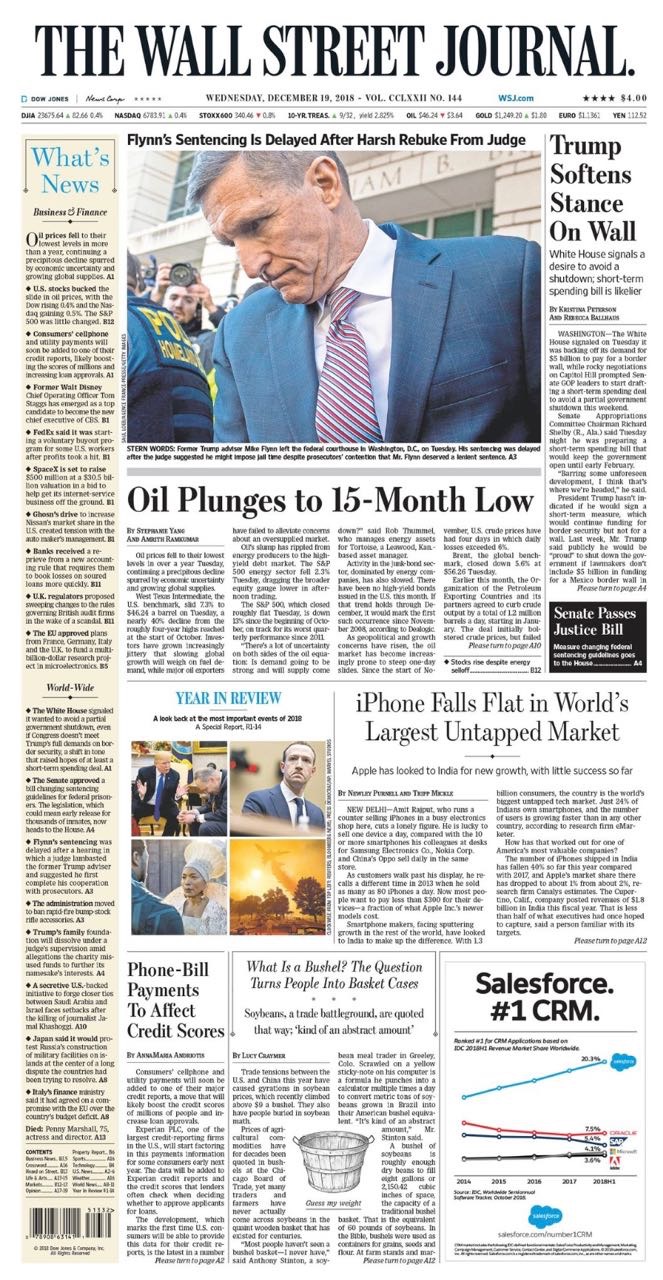
That’s the headline of my most recent story, which I wrote with my WSJ colleague Tripp Mickle. It’s on the front page of Wednesday’s print paper and online here.
It begins:
NEW DELHI–Amit Rajput, who runs a counter selling iPhones in a busy electronics shop here, cuts a lonely figure. He is lucky to sell one device a day, compared with the 10 or more smartphones his colleagues at desks for Samsung Electronics Co. , Nokia Corp. and China’s Oppo sell daily in the same store.
As customers walk past his display, he recalls a different time in 2013 when he sold as many as 80 iPhones a day. Now most people want to pay less than $300 for their devices—a fraction of what Apple Inc.’s newer models cost.
Smartphone makers, facing sputtering growth in the rest of the world, have looked to India to make up the difference. With 1.3 billion consumers, the country is the world’s biggest untapped tech market. Just 24% of Indians own smartphones, and the number of users is growing faster than in any other country, according to research firm eMarketer.
How has that worked out for one of America’s most valuable companies?
The number of iPhones shipped in India has fallen 40% so far this year compared with 2017, and Apple’s market share there has dropped to about 1% from about 2%, research firm Canalys estimates. The Cupertino, Calif., company posted revenues of $1.8 billion in India this fiscal year. That is less than half of what executives had once hoped to capture, said a person familiar with its targets.
“It’s been a rout,” said Ishan Dutt, an analyst at Canalys.
November 4th marked one year since we adopted Ginger.

If you missed my post from March, here’s the backstory and some pics of her as a puppy. This was the day we got her:

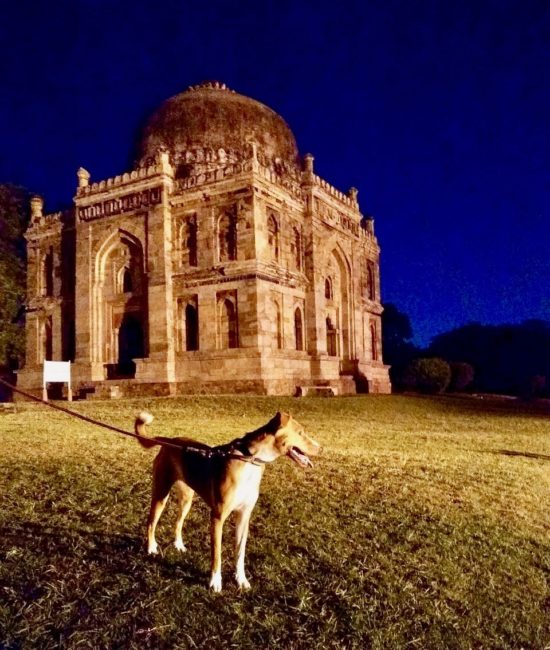
To recap: She is a New Delhi street dog and displays many of the characteristics of desidogs (also known as Indogs or Indian pariah dogs.)
Now almost a year and a half old, she is fully grown, weighing about 20 kg (45 pounds).
She is an alert, cautious, playful, smart, athletic, and affectionate dog.
She is also quite protective of our house, springing into action and barking if anyone unfamiliar rattles our gate.
She also loves to play fetch.
She is a powerful jumper.
She doesn’t demand to be by our sides constantly, but does enjoy sleeping near (or sometimes directly on) us.
Oh, and she definitely has a mischievous streak. She seems to enjoy nothing more than stealing a shoe or a sock as I sit down to put them on before leaving for the office in the morning, prompting me to chase after her (which is no doubt the point of the “game” for her).







If you’re interested in adopting a desi dog here in New Delhi (or just want to donate to a good cause) check out the Indian Canine Uplipftment Centre, or ICUC, where we got Ginger.
They do great work rescuing pups and providing medical services to the city’s huge population of strays.
We’ve also had some very informative training sessions with Namratha Rao of Pawsitive Tales. She really knows the breed well and is highly skilled. Get in touch with her if you have any dog training needs.
Here’s to 2019 and beyond with Ginger!
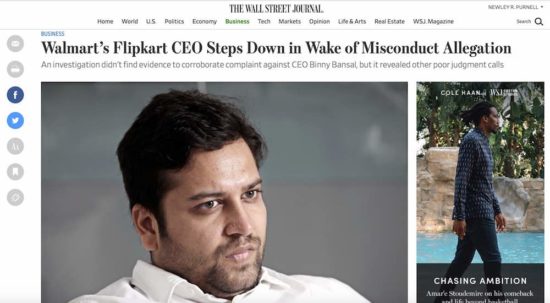
That’s the headline of my most recent story, which I wrote with my colleague Sarah Nassauer, out Tuesday.
Walmart Inc. said the chief executive of Flipkart Group, its Indian e-commerce business, resigned following an independent investigation into a personal misconduct allegation.
Binny Bansal, one of the co-founders of Bangalore-based Flipkart, decided to step down after “recent events risked becoming a distraction,” Walmart said Tuesday.
Walmart opened an investigation this summer after a former Flipkart employee came forward alleging Mr. Bansal had sexually assaulted her sometime around 2016, according to a person familiar with the matter.
During the negotiations this year to sell Flipkart to Walmart, Mr. Bansal didn’t disclose the allegation against him or that he had hired security personnel to privately deal with the matter, the person said.
As part of the investigation, Mr. Bansal told Walmart he had a consensual relationship with the woman and denied he assaulted her, the person said.
Click through to read the rest.

That’s the headline of a story I did with my colleague Corinne Abrams, out Monday.
India’s biggest mobile-payments startup, Paytm, has wooed hundreds of millions of users and attracted investment from Warren Buffett’s Berkshire Hathaway Inc.
The biggest challenge for its charismatic founder, 40-year-old Vijay Shekhar Sharma, lies ahead: Keeping Alphabet Inc.’s Google and Facebook Inc.’s WhatsApp at bay as they push into India, the world’s hottest new market for mobile money.
Paytm’s popular smartphone app, which can be used to pay for everything from auto-rickshaw rides to movies and utility bills, handles some 500 million transactions a month across its network. Paytm, launched in 2010 by Mr. Sharma’s One97 Communications Ltd., has dominated India’s payments space since late 2016. That is when Prime Minister Narendra Modi nullified India’s largest-denomination notes to curb corruption, triggering a cash crunch. Faced with long lines for ATMs, consumers flocked to the Paytm app.
Click through to read the rest.


That’s the headline of my most recent story, written with a colleague, out yesterday.
India’s highest court ruled that the world’s largest biometric identification database doesn’t infringe on citizens’ privacy rights—but needs some new limitations.
The country’s controversial Aadhaar program uses photos, finger and eye scans and has already signed up more than 1 billion people. It has sparked an intense global debate over how far a democracy should be able to go in collecting the personal data of its citizens and how that data can be used, shared and protected.
Wednesday’s Supreme Court ruling was a response to multiple challenges to the system.
A five-judge panel ruled in a 4-1 decision that the program is constitutional and helps the poor by streamlining disbursement of welfare benefits. Being in the database, however, shouldn’t be required for using mobile phones, opening bank accounts or for school admissions, according to the 1,448-page document outlining the court’s decision. It had been unclear for some time whether such organizations could compel people to supply Aadhaar numbers.
“It’s a historic judgment,” Finance Minister Arun Jaitley said. “Everyone must realize, including critics of Aadhaar, that you can’t defy technology or ignore it.”
Click through to read the rest.

That’s the headline on my latest story, out yesterday. It begins:
SoftBank Group Corp. is doubling down on one of its biggest bets in India by leading a $1 billion investment in hotel-booking startup OYO Hotels.
The company, based in Gurgaon, India, has received $800 million in a round led by SoftBank’s Vision Fund, which SoftBank Chief Executive Masayoshi Son is using to back cutting-edge technologies, OYO said Tuesday. U.S. venture-capital firms Sequoia Capital and Lightspeed Venture Partners also contributed to the round, and existing investors have pledged a further $200 million.
“We plan to rapidly scale our business,” with a focus on continuing OYO’s expansion into China, said 24-year-old company founder Ritesh Agarwal in a written statement. OYO also operates in Malaysia, Nepal and the U.K.
The new round of funding values the company at $5 billion, including the new funds, according to a person familiar with the matter. That is up from a post-money valuation of roughly $850 million when OYO received $250 million last year in a round led by SoftBank.
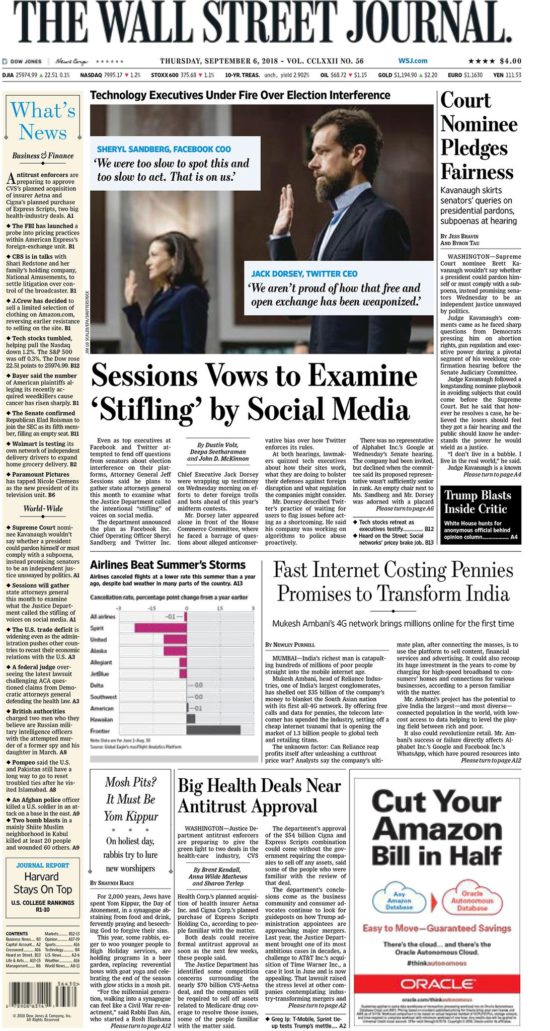
That’s the headline on my latest story, a page one piece out yesterday and online here. It begins:
MUMBAI—India’s richest man is catapulting hundreds of millions of poor people straight into the mobile internet age.
Mukesh Ambani, head of Reliance Industries, one of India’s largest conglomerates, has shelled out $35 billion of the company’s money to blanket the South Asian nation with its first all-4G network. By offering free calls and data for pennies, the telecom latecomer has upended the industry, setting off a cheap internet tsunami that is opening the market of 1.3 billion people to global tech and retailing titans.
The unknown factor: Can Reliance reap profits itself after unleashing a cutthroat price war? Analysts say the company’s ultimate plan, after connecting the masses, is to use the platform to sell content, financial services and advertising. It could also recoup its massive investment in the years to come by charging for high-speed broadband to consumers’ homes and connections for various businesses, according to a person familiar with the matter.