Categories
HOWTO Travel

My Top 10 Southeast Asia Travel Tips

Temple 1029048 1280

tl;dr:

  1. Don’t rush
  2. For longer trips, use Bangkok as a Base
  3. Next, Look Beyond Thailand to Cambodia, Laos, and Especially Vietnam
  4. More Destinations: Myanmar and Borneo
  5. Eat Liberally
  6. Disconnect
  7. If You Must, SIM Cards are Wi-Fi Widely Available
  8. Don’t Overpack, But Bring the Right Stuff
  9. Ask Friends of Friends for Advice
  10. Do Your Own Research

I spent a decade living and reporting in Southeast Asia: eight years in Bangkok followed by just over two years in Singapore.

Between work trips and vacations, I’ve visited every sizable country in the region, and most on several occasions: Myanmar, Malaysia, Laos, Cambodia, Indonesia, the Philippines, and Vietnam.

Friends sometimes ask me for tips on visiting the region, so I decided to compile my advice here, in one place.

But first, a couple of caveats:

  • The Web abounds with detailed suggestions on where to go and what do in the region. You will certainly be able to find specific tips by simply Googling your potential destinations and interests, but what I’ve aimed to do here is provide mostly my big-picture thoughts — the most important principles you should know when planning a trip.

    I’m also throwing in a few specifics, of course, but this post is meant to be a starting point for trip research and planning.

  • Also, a warning that things change quickly: small, once-quiet towns become overrun (I’m looking at you, Pai, Thailand) and cool new bars and restaurants pop up unexpectedly where they once didn’t exist.

1. Don’t Rush
IMG 1611

This is a no-brainer for seasoned travelers, but it bears repeating.

As Rolf Potts says in his excellent 2002 book “Vagabonding: An Uncommon Guide to the Art of Long-Term World Travel,” few regions in the world offer such diversity of culture, within such close proximity, that can be visited as easily and cheaply as Southeast Asia.

But don’t hurry to try to do too much all at once, with a rapid-fire itinerary like you would compile for a trip to the U.S. or Europe. Transportation links are pretty good, but things can take a little longer in Southeast Asia, which is part of its charm anyway.

If you’re coming from the U.S., for example, you really need two weeks at a minimum, otherwise you’ll be jet lagged much of the time you’re here, and will simply spend too much time on the airplane compared to your time actually on the ground. Longer than two weeks is even better, if you can swing it.

(This is, of course, generally good travel advice wherever you’re going: It’s better to focus on one or two destinations and explore them well than to visit as many places as possible but only get to know them superficially.)

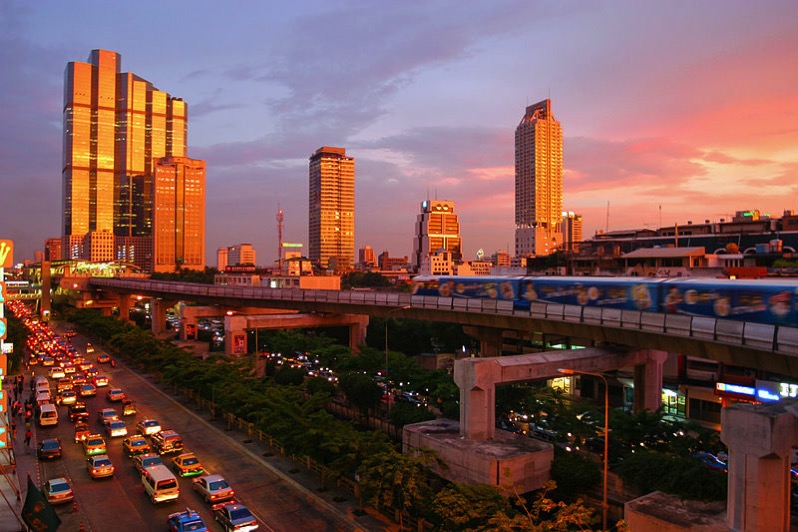
2. For longer trips, use Bangkok as a Base
2016 04 23 bkk

Again, this may seem obvious, but a good approach, especially if you’re traveling on a limited budget or have a a lot of time — as in, months — and a flexible schedule, is to fly into the Thai capital.

Bangkok is an excellent choice because:

  • it’s right in the middle of the region, with good transport links
  • has food and lodging that are relatively inexpensive
  • is fascinating in its own right

Those who do even a little bit of investigating will a find a much more complex place than the one featured in movies like “The Beach” and “The Hangover Part 2.”

A few of my favorite Bangkok destinations and activities include:

  • The Jim Thomspon House — an excellent first-day-in-Bangkok place to visit, with a lovely shaded restaurant where you can have a cool drink after the tour
  • Chatuchak Market, the famous weekend bazaar, great for shopping — or simply people watching via the handful of bars and restaurants there
  • the restaurant Arun Residence, from which you can take in Wat Arun, across the Chao Phraya
  • the roofop bar at the Banyan Tree hotel
  • Smalls, a new-ish neighborhood bar on Soi Suan Phlu
  • Lumphini Park — great for a walk or jog, especially in the mornings and evenings, when it’s a bit cooler
  • Eat Me restaurant in Silom
  • Soul Food Mahanakorn restaurant in Thonglor
  • river taxi ride on the Chao Phraya
  • a shopping mall food court at a place like MBK, where you can sample just about any Thai dish imaginable

From the Thai capital, you can travel up to the northern city of Chiang Mai or down to some of the beaches, depending on your inclination. (One fun way to get up to Chiang Mai is the overnight train. You can book tickets from a local travel agent or from your hotel concierge in Bangkok.)

Chiang Mai:

  • has excellent food
  • has many picturesque temples
  • has a climate is slightly cooler than Bangkok’s
  • is fairly walkable, for Thailand, at least in the center of the city

Note: It is, however, a city; many people imagine it to be a small town, but it does suffer from big city ills like surprisingly thick traffic at times, and occasionally aggressive touts.

For budget hotels in Chiang Mai, I have had some nice stays at 3 Sis.

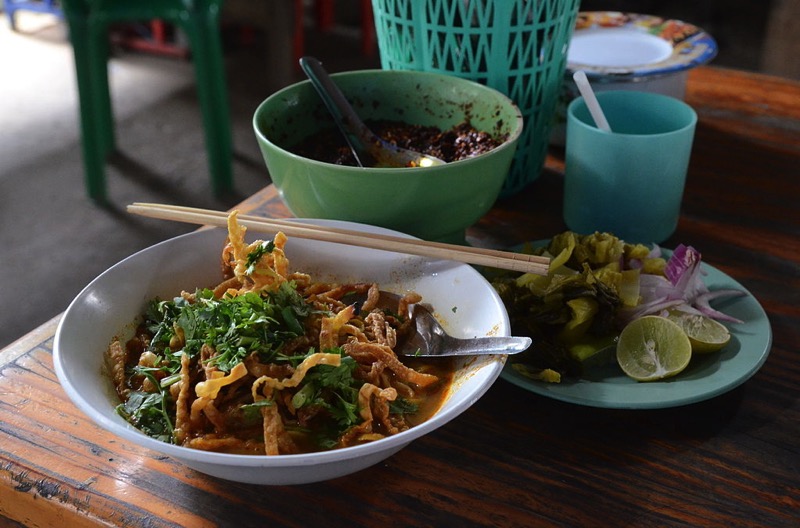
And for khao soi noodle soup, a northern Thailand specialty, my favorite restaurant is the nearby Huen Phen. (For Huen Phen, note that khao soi is served at the restaurant during lunchtime; the more upscale restaurant inside doesn’t serve it for dinner.)

Outside Chiang Mai, I really love the far northern town of Mae Hong Son. We had a fun trip there several years ago and stayed at Fern Resort.

Another option, from Bangkok, is go to the beach.

Popular destinations in the Gulf of Thailand, just several hours drive (taxis are bookable through hotels) are:

  • Koh Samet
  • the resort city of Hua Hin

Some of the best beach trips we took from Bangkok involved simply renting a car and driving the three or so hours down to a resort or hotel in Hua Hin.

Koh Samet and Hua Hin aren’t as exotic as some of Thailand’ more far-flung seaside spots, but they’re easier to get to.

Farther afield are beaches you’d need to fly to, but where you’ll find more options:

  • the island of Phuket
  • Krabi

Parts of Phuket are over-developed and seedy, while others a quiet and contain gorgeous, serene beaches. The thing to remember about Phuket is that it’s so big that it offers all kinds of accommodations, even though many people are only familiar with its less attractive parts.

Meanwhile, a longtime favorite location of ours in Krabi is Railei Beach Club, though I haven’t been in several years and I hear the area has gotten quite crowded.

Further afield: One of the most memorable trips I did in Thailand was in 2008, when, for a Travel + Leisure Southeast Asia story I rented a car and drove along the Mekong river, from the city of Udon Thani in the north to the city of Ubon Ratchathani in the east.

Few tourists venture to this part of Thailand, the rural Isaan region, and I very much recommend visiting to see how a huge portion of Thai people live.

So, to sum up: Bangkok is an fascinating and fun city, and gives you access to Chiang Mai in the north and the beaches in the south.

3. Next, Look Beyond Thailand to Cambodia, Laos, and Especially Vietnam

2016 02 14 southeast asia

If you have more than ten days or two weeks, you also visit somewhere nearby like Angkor Wat, next door in Cambodia. (It’s possible to travel overland from Bangkok, to Siem Reap, where Angkor Wat is located, but flights are cheap, plentiful, and safer.)

A few additional destinations nearby are Laos, where you could visit the sleepy capital of Vientiane, or the even sleepier riverside city of Luang Prabang.

That said, Vietnam deserves special mention – it’s where I’ve had many of my most exciting and interesting travel experiences in Asia, particularly on motorbiking trips.

I’ve done two on World War II-era Minsk motorbikes with Hanoi-based tour group Explore Indochina.

I did another one independently, taking the bike on a train overnight from Hanoi to Sapa, a city in the north, and riding back to Hanoi over several days. There’s no better way to see the countryside and interact with people than on two wheels.

Hanoi, the cultural capital, is especially atmospheric, with a dense downtown area full of cafes and shops. Ho Chi Minh City, the commercial hub formerly known as Saigon, is buzzing and has incredible food.

4. More Destinations: Myanmar and Borneo
Myanmar

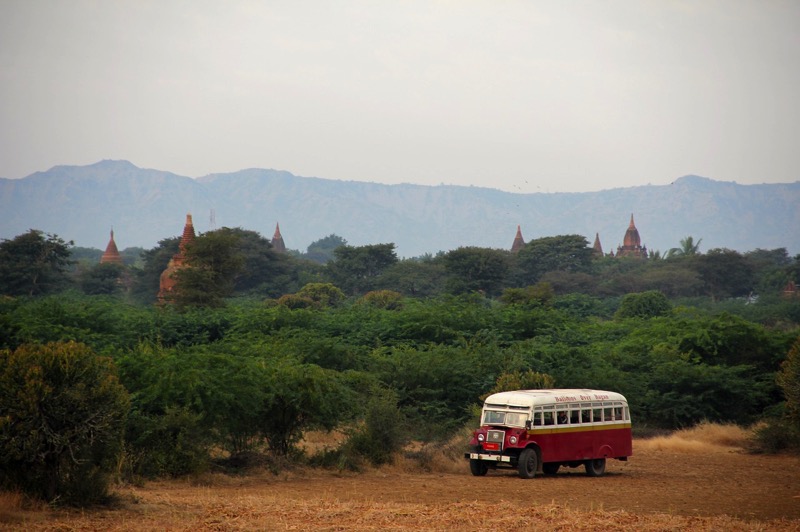
If you’re interested, now seems to be a good time to visit Myanmar. The country is largely undeveloped, and can be difficult to travel in, but began several years ago the process of political and economic reforms. That means tourism will likely pick up in the future. I haven’t been to the temples of Bagan, but I hear they are worth visiting.

Yangon, the former capital, is home to the remarkable Shwedagon Pagoda. Meanwhile the new capital, the largely deserted Naypyidaw, is increasingly drawing curious onlookers.

Consider Borneo. Travelers often forget about the gargantuan island, shared by Malaysia, Indonesia and Brunei, but it’s not too far a flight from Singapore or Kuala Lumpur.

I highly recommend Gunung Mulu National Park, where you can take in a curious sight known as the bat exodus.

5. Eat Liberally
Khao soi

Street food, in most Southeast Asia locations – and certainly in Thailand – is generally safe to eat. Though you should follow the well-known rule of avoiding food that’s been sitting around for a while and aim to eat freshly cooked items. And when in doubt, don’t eat fresh vegetables that haven’t been cooked.

For Thailand eats, I suggest checking out my pal Austin Bush’s blog. He’s a longtime Bangkok-based food writer and photographer and knows a tremendous amount about the region’s cuisines, especially Thai food.

You can search his site for specific dishes or cities, and he also has an annotated food map of Bangkok on Google Maps.

I also suggest my friend Chawadee Nualkhair’s Bangkok Glutton blog.

Chaw also has a book I recommend called “Thailand’s Best Street Food,” which tackles Bangkok, Phuket, Chiang Mai and more.

6. Disconnect

Beach 425167 1280

You will likely be excited and want to show images from your travels, as soon as you capture them, via Facebook and Instagram. You may want to Tweet things.

You should not.

Wait until the trip is over to delve into your social media feeds. That way you can focus on the present and enjoy the moment. Read books or listen to music instead.

Definitely document things by taking photos and writing down your experiences, but sharing them in real-time will only divert your attention unnecessarily.

On several occasions after getting through especially frenzied periods of work in Bangkok, I decamped to Chiang Mai, where I spent a few days decompressing, enjoying novels while sitting next to the river drinking coffee (or beer).

These periods of offline reflection were always rewarding.

7. If You Must, SIM Cards and Wi-Fi are Widely Available

Smartphone

Although I advocate disconnecting while traveling for pleasure, I often like to have a local number while I’m in a different country to make calls and get mobile internet access for mapping and other uses.

SIM cards for (unlocked) smartphones are widely available in Southeast Asia. You can buy them when you arrive at Bangkok’s Suvarnabhumi airport, for example, and at most other airports in the region these days. In Thailand they are often available in 7-Elevens, as well.

Wi-Fi is also available at not just at hotels, as you’d expect, but in places like cafes and restaurants.

8. Don’t Overpack, But Bring the Right Stuff

Sea 84629 1280

Yes, Southeast Asia’s climate is tropical, so you’ll want warm weather clothing like shorts and short-sleeved shirts. But keep in mind that people in cities, especially, tend to dress conservatively despite the heat, eschewing shorts for trousers and often wearing long-sleeved shirts.

My opinion: You should aim to blend in, not stick out. So save your swim suits and battered T-shirts for the beach or pool.

And a word on sandals: These generally shouldn’t be worn in cities. Some nicer bars and restaurants in many Southeast Asian cities require patrons to wear closed-toe shoes. So bring some along, and when in doubt, dress in a more respectable manner than you might assume is necessary. It’s always better to be slightly over-dressed than under-dressed.

9. Ask Friends of Friends for Advice
Earth

Traveling years ago with my pal Matt Gross, a fantastic food and travel writer, taught me the importance of hitting up friends — and friends of friends — for travel tips.

When researching his New York Times travel stories, Matt was a master at using his vast network of contacts to suss out where to go and what to do in particular destinations.

So, before you embark on your trip:

  • Email all your friends to ask if anyone has recently been to the countries you’re considering visiting
  • Put out a call on Facebook and Twitter for advice
  • Ask everyone you know to put you in touch with people they might know who live in the places you’re targeting

The tips you get this way — from people to whom you may only be loosely connected — are often highly valuable. Of course, you’ll want to do your online research, but advice from people on the ground is always important.

10. Do Your Own Research

Flying

Reading the Lonely Planet tour guide history section for the destination you’re exploring is better than nothing, but if you’re not delving more deeply into the region’s history, you’re doing it wrong.

Some books I recommend:

Happy traveling!

Categories
Misc.

On Streaming Music in Low-Connectivity Environments

Living in India has given me an entirely new perspective on user experience challenges to streaming music services in emerging markets, where connectivity is often weak.

Never mind on mobile: Even at home, on Wi-Fi, services from the big players — Spotify, Apple Music, Amazon Music — are often difficult to use.

This actually has me considering using…mp3s (!) again.

Categories
India Tech

Google CEO’s Advice to Ambitious Students: Loosen Up

2017 01 06google

That’s the gist of my story yesterday, which began:

Google Chief Executive Sundar Pichai has some straightforward life advice for students at his alma mater: loosen up and have some fun.

The India-born Mr. Pichai, speaking Thursday at the elite Indian Institute of Technology Kharagpur outside Kolkata, told university students who asked how they could emulate his success to pursue their passions, take risks, and be creative.

That is unconventional advice in a country where parents often pressure their children from a young age to study hard so they can secure steady employment.

“Academics is important but it is not as important as it’s made out to be,” Mr. Pichai said, adding that during his time studying metallurgical engineering at the school more than two decades ago he stayed up late, slept through the occasional class — and may even have earned a C in one course.

“I worked hard but we did have our share of fun as well,” he said.

And:

Near the end of his hour-long town hall, an earnest student asked Mr. Pichai for advice on how he could make the most of his four years on campus. Mr. Pichai’s response was simple: “I wouldn’t overthink it.”

Previously: Google’s Newest India Focus: Connecting Small Businesses.

Categories
India Tech

Google’s Newest India Focus: Connecting Small Businesses

2017 01 05india

That’s the subject of my latest WSJ story, which begins:

NEW DELHI— Alphabet Inc.’s Google is ramping up its efforts to get India’s small businesses online, the latest step in its quest to win new users in the populous nation.

Google Chief Executive Sundar Pichai said on Wednesday that the Mountain View, Calif., company will launch later this year a tool that allows owners of small businesses that are now offline to create mobile-friendly websites for free. Google says nearly three quarters of the country’s 51 million small businesses currently lack a web presence.

India will be the first country to get access to the feature, which will then be rolled out to other nations.

“India shapes how we develop products in so many ways, big and small,” the India-born Mr. Pichai told a conference of entrepreneurs here. He said the company has added more staff locally and executives have been spending more time in the South Asian nation.

As I’ve noted before, India holds huge potential for Google — and other big U.S. tech firms, like Uber and Amazon — because it is home to more than 1.2 billion people, most of whom have yet to get online for the first time.

Categories
Newley's Notes

In This Week’s Newley’s Notes: Addicted to ‘The OA,’ Why 401(k)s Suck; Snowden Revisited

2017 01 04sky

Edition 78 of my email newsletter went out to subscribers yesterday. It’s pasted in below.

To get these weekly dispatches delivered to your inbox before I post them on Newley.com, enter your email address here. It’s free, it’s fun, it’s brief, and few people unsubscribe.


Hi friends, thanks for reading Newley’s Notes, a weekly newsletter in which I share links to my stories and various items I think are worth highlighting.

So, okay, first off: With some downtime last week, I started watching “The OA,” a new sci-fi series from Netflix that began last month.

Do you know this show?

It’s totally creepy and weird, there are cliff-hangers and plot twists even from the first episode, and it’s totally compelling. I’m only a few episodes in and really loving it.

I would provide more links to further reading about the show but I don’t want to subject myself to any potential spoilers. Highly recommended!

On to this week’s edition.

WHAT I WROTE AT NEWLEY.COM

My Top 10 Posts from 2016 – A re-cap of my most-clicked posts, from Singaporean barbecue to my iPhone home screen to “coyowolves.”

The Best Books I Read in 2016 – a treatise on the importance of “deep work,” and a book on Southeast Asia’s tycoons.

Are Uncontacted Tribes Increasingly Emerging from the Wilderness? – A post prompted by watching another program on Netflix, a documentary about uncontacted people in the Amazon.

FIVE ITEMS THAT ARE WORTH YOUR TIME THIS WEEK:

1) Dave Barry reviews 2016. His re-cap of what was a highly memorable year is laugh out loud funny.

2) Is Edward Snowden a whistle-blower or a tool of Russian intelligence? Edward Jay Epstein, author of the new Knopf book “How America Lost Its Secrets: Edward Snowden, the Man and the Theft,” says Snowden has consistently lied following his disclosure of NSA secrets.

3) 401(k)s don’t work. So say…the people who originally championed them. The nut from a WSJ story today:

Many early backers of the 401(k) now say they have regrets about how their creation turned out despite its emergence as the dominant way most Americans save. Some say it wasn’t designed to be a primary retirement tool and acknowledge they used forecasts that were too optimistic to sell the plan in its early days.

Others say the proliferation of 401(k) plans has exposed workers to big drops in the stock market and high fees from Wall Street money managers while making it easier for companies to shed guaranteed retiree payouts.

4) Thread of the week: “Physicians of Reddit: What’s the worst injury you’ve seen at a routine check-up?” Not for the squeamish.

5) “Your Life in Weeks.” That’s the title of this timeless post on the always-excellent blog “Wait But Why” about the preciousness of time.

Thanks for reading.

Love,
Newley

Categories
Movies

Are Uncontacted Tribes Increasingly Emerging from the Wilderness?

2016 12 30 amazon

I recently watched a short, thought-provoking documentary on Netflix from U.K. broadcaster Channel 4 called “First Contact: Lost Tribe of the Amazon.

It contains some captivating footage of uncontacted tribes in the Amazon, on both the Peruvian and Brazilian sides, emerging from the wilderness.

(Uncontacted people are those with no direct contact with civilization. In parts of the Amazon, laws set aside lands for such people, and forbid outsiders from interacting with them.)

The filmmaker, Angus Macqueen, has written online that the uncontacted people in the documentary have seemed motivated to change their behavior — to venture out of the wilderness — due to:

  1. A need to flee encroachment from illegal loggers and drug runners
  2. A desire to obtain materials they don’t have, like axes and clothing

In addition to raising ethical questions about governmental policies that intentionally keep such people isolated, where they lack basic medical care and often starve, I was wondering:

Are we seeing this phenomenon elsewhere? Is there something larger at play in our increasingly globalized the world? Are other uncontacted people also emerging?

I did a little research, and estimates suggest most uncontacted peoples are located in:

  1. the Amazon, and
  2. New Guinea

The film covers a pocket of the first, but as for the second, I haven’t been able to find any reports of uncontacted people in Asia increasingly venturing out of their lands.

This suggests to me that rather than a global trend, the film shows behavior that is indeed unique to the Amazon.

But maybe I’m missing something? I’ll have to keep investigating.

If you have any thoughts, drop me a line (n @ newley dot com) or leave a comment below.

Categories
Books

The Best Books I Read in 2016

2016 12 30books

I read many books this year, and as faithful readers know, I’ve been sharing my notes from some of them under the heading “Book Notes.”

I’ll break down my picks according to two categories:

My favorite book published this year:

I read Cal Newport’s “Deep Work: Rules for Focused Success in a Distracted World” over the summer, and its insights have stuck with me.

In brief, Newport, a computer science academic, stresses the importance to our careers of doing uninterrupted, sophisticated, value-added work, and avoiding distractions like social media.

Common sense? Yes.

But in a world where information of dubious quality and technologies engineered to monopolize our attention seem to proliferate by the day, it’s a timely reminder that we must focus on activities that distinguish us from our competitors.

My full notes are here.

My pick for the best book I read this year*, regardless of when it was published:

It’s been around for nearly a decade, but Joe Studwell’s “Asian Godfathers: Money and Power in Hong Kong and Southeast Asia” was a revelation for me, because it provided historical context for what I’d seen all around me during my time in Thailand and Singapore.

Studwell’s thesis: The region’s dysfunctional governments have given rise to its billionaire godfathers.

In turn, Southeast Asia has produced few, if any, truly global brands because the region’s biggest firms simply take advantage of monopolies or licenses, don’t really innovate, and thus aren’t internationally competitive.

My full notes are here.
*Okay, I’m cheating here: I actually read this book in November 2015, but that’s pretty close to 2016!

Categories
Misc.

My Top 10 Posts from 2016

2016 12 30blogging

Here are the ten most popular posts from Newley.com this year, measured by number of visits.

I will refrain from speculating on the reasons. Food, tech, weird animals, soccer — the Internet, I learned a long time ago, works in mysterious ways.

  1. Recommended: Decker Barbeque, Texas-Style BBQ in Singapore — A report from what is, if you ask me, the best purveyor of smoked meat products in the city-state.
  2. My iPhone Home Screen, Early 2016 — There have been some tweaks of late. Stay tuned for an update.
  3. Rise of the ‘Coyowolf’ — Part Wolf, Part Dog, Part Coyote — This one has drawn a lot of search engine traffic. I’m not sure why. People seem to really love coyowolves.
  4. Why You Shouldn’t be Surprised When England Lose — This was written, I must point out, just five hours before the team…lost to Iceland in the Euros.
  5. The 10 Must-Have Apps I Install on Every New Mac — You can’t go wrong with a top ten post for Mac geeks!
  6. By Me Yesterday: India’s Paytm Sees Surge in Usage After Demonetization — This was merely an excerpt from a story of mine. I suspect many folks have been looking up mobile payment services here in India of late.
  7. Single, Individually Wrapped Bananas for Sale in Singapore — Truly an amazing food product.
  8. IPhone 6 Touchscreen Problems? You’re Not Alone — This issue persisted for me. And I was forced to ditch my device. More soon on that. I am not pleased.
  9. By Me Last Week: Facebook Asia-Pac VP Dan Neary Talks Growth in the Region — A link to my story.
  10. Book Notes — ‘Deep Work,’ by Cal Newport — My thoughts on the popular treatise on the importance of uninterrupted, complex work.

Onward to 2017!

Categories
Newley's Notes

Newley’s Notes 77: Uber in India; Apple Scoop; OMGWTF: New ‘Bladerunner’?

Sunset 433626 1280

Edition 77 of my email newsletter went out to subscribers yesterday. It’s pasted in below.

To get these weekly dispatches delivered to your inbox before I post them on Newley.com, enter your email address here. It’s free, it’s fun, it’s brief, and few people unsubscribe.


Hi friends, thanks for reading Newley’s Notes, a weekly newsletter in which I share links to my stories and various items I think are worth highlighting.

I hope you had an enjoyable holiday period. Best wishes for a happy new year.

My apologies: This week’s Newley’s Notes is a couple of days late due to holiday travel.

A and I just returned to Delhi after an excellent stay at Neemrana Fort Palace, about three hours by car south of here.

It’s a 15th century fort that’s been turned into a hotel. It’s quiet, the countryside is beautiful, and there’s even a fascinating stepwell nearby. I highly recommended it for a quick getaway from Delhi.

Okay. On to this week’s edition.

WHAT I WROTE IN THE WSJ

Uber’s Drive Into India Relies on Raw Recruits – This is a story I’d been working on for some time, and I was happy with how it turned out. It begins:

NEW DELHI—How do you train a million new Uber drivers in a country where most people have never driven a car, tapped on a smartphone or even used an online map?

Uber Technologies Inc. faces that daunting task as it tries to avoid its fate in China, where it decided this year to sell its business to homegrown champion Didi Chuxing Technology Co.

The $68 billion San Francisco startup has plenty of cash and cutting-edge technology to bring to its battle in India. Also, the country hasn’t thrown up the kind of regulatory hurdles that have hindered Uber’s growth in other regions. So the company’s ability to find and teach new drivers could decide whether Uber can dominate this fast-growing market.

Click through for the rest of the piece, along with a video narrated by yours truly.

I also wrote a sidebar titled “5 Ways Uber Is Tweaking Its Strategy in India.”. These localizations include accepting cash payments, going app-less, using motorbikes and more.

Apple Is Discussing Manufacturing in India, Government Officials Say – A scoop with a colleague that was followed by Reuters and picked up by many outlets.

It begins:

NEW DELHI— Apple Inc. is discussing with the Indian government the possibility of manufacturing its products in the country, according to two senior government officials, as the company seeks to expand its sales and presence in the South Asian nation.

In a letter to the government last month, the Cupertino, Calif., firm outlined its plans and sought financial incentives to move ahead, the officials told The Wall Street Journal. Senior Trade Ministry authorities in recent weeks met to discuss the matter.

An Apple spokeswoman didn’t respond to requests for comment.

I’ve written, as you’ll recall, about Apple in India before. It’s a huge market for the firm’s potential future growth.

FIVE ITEMS THAT ARE WORTH YOUR TIME THIS WEEK:

1) Wait, there’s a new “Bladerunner” coming? How did I miss this news?

Longtime readers will know the 1982 Ridley Scott sci-fi classic is one of my favorite films.

Well, “Bladerunner 2049” will be here in October. The trailer’s on YouTube here. Wikipedia sums up the plot this way:

Thirty years after the events of the first film, a new blade runner, LAPD Officer K (Ryan Gosling), unearths a long-buried secret that has the potential to plunge what’s left of society into chaos. K’s discovery leads him on a quest to find Rick Deckard (Harrison Ford), a former LAPD blade runner who has been missing for 30 years.

The trailer: meh. The idea of “Bladerunner” returning? A slightly more optimistic meh. I feel like I should be excited about this.

2) An analysis by Quartz of 36 best books of the year lists shows the title most mentioned has been Colson Whitehead’s novel “The Underground Railroad.”

I haven’t read it. Have you?

3) Jerry Lewis is a tough guy to interview.

In this seven-minute video, the famed, 90-year-old comedian had a remarkably cranky exchange with The Hollywood Reporter.

His mocking laugh is my favorite part.

4) If the less-than-robust Mosul Dam breaks, a million and a half people could perish.

That’s the thrust of this illuminating piece by Dexter Filkins in The New Yorker.

5) Was 2016 an especially bad year for celebrity deaths?

This week brought us news of George Michael’s death. Then Carrie Fisher. Then Carrie Fischer’s mom.

Snopes.com answers the question.

6) SPECIAL BONUS LINK: DESPITE WHAT YOU THINK, THE WORLD IS GETTING BETTER. There was a lot of bad news in 2016, but these six charts serve as a reminder that the world is, in the aggregate, improving.

Over the last century, extreme poverty and child mortality are down drastically, while democracy, education, literacy, and vaccinations have flourished. More info here.

Thanks for reading. Happy 2017!

Love,
Newley

Categories
HOWTO Tech

How to Send a Paperless Post Greeting Card *Later*

2016 12 29paperlesspost

TLDR: enter the name and email address and click the “add recipient” button. Then the option to send the card later will appear below.

I recently sent an online greeting card via Paperless Post.

For such a popular service, I was surprised to find myself temporarily confounded by part of the process.

After configuring the card, I wanted to set it up to send the next day.

The solution was pretty easy to figure out with some Googling, but I wanted to share it here in case others encounter similar problems.

Here’s what you have to do:

  1. First, after entering the recipient’s name and email address, click the box on the right that says “add recipient.”

    In the image above, that’s the grey box on the top right. (Maybe I was in a rush, but this wasn’t especially apparent to me. I entered the name and address, and then all I saw below was an option to send the card immediately.)

  2. Then an option appears below that says “schedule sending.” That allows you to pick the time and day and set it up for sending.

Again, maybe I was just in a hurry. But my solution would be to change the website’s setup so the “schedule sending” option visible from the very outset.

I wonder how many people abort sending, or search out another service, when it looks like the only option is to send the card straight away, perhaps as a service you have to pay for.