
I hope your holiday was full of food, friends, family, and festivities.
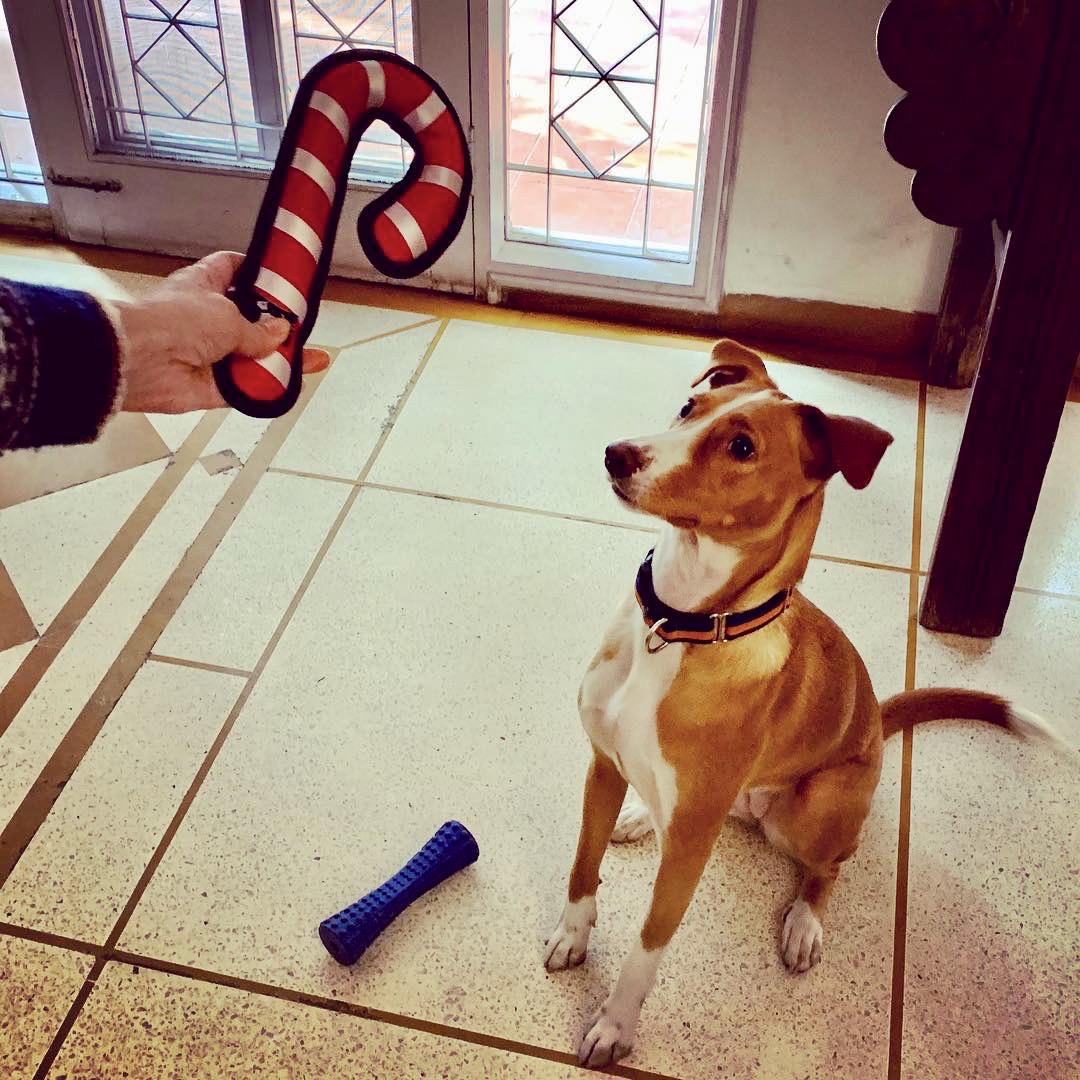
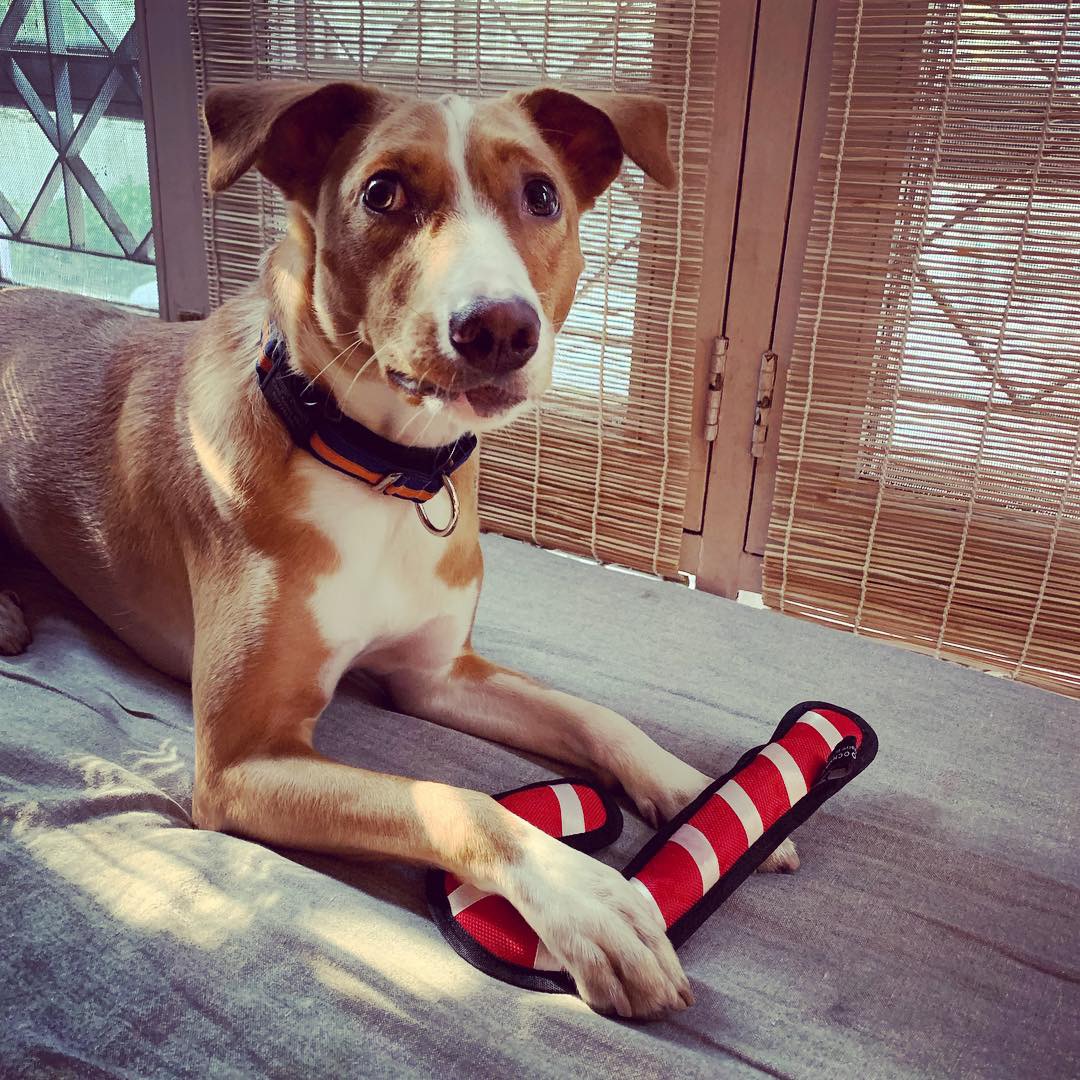
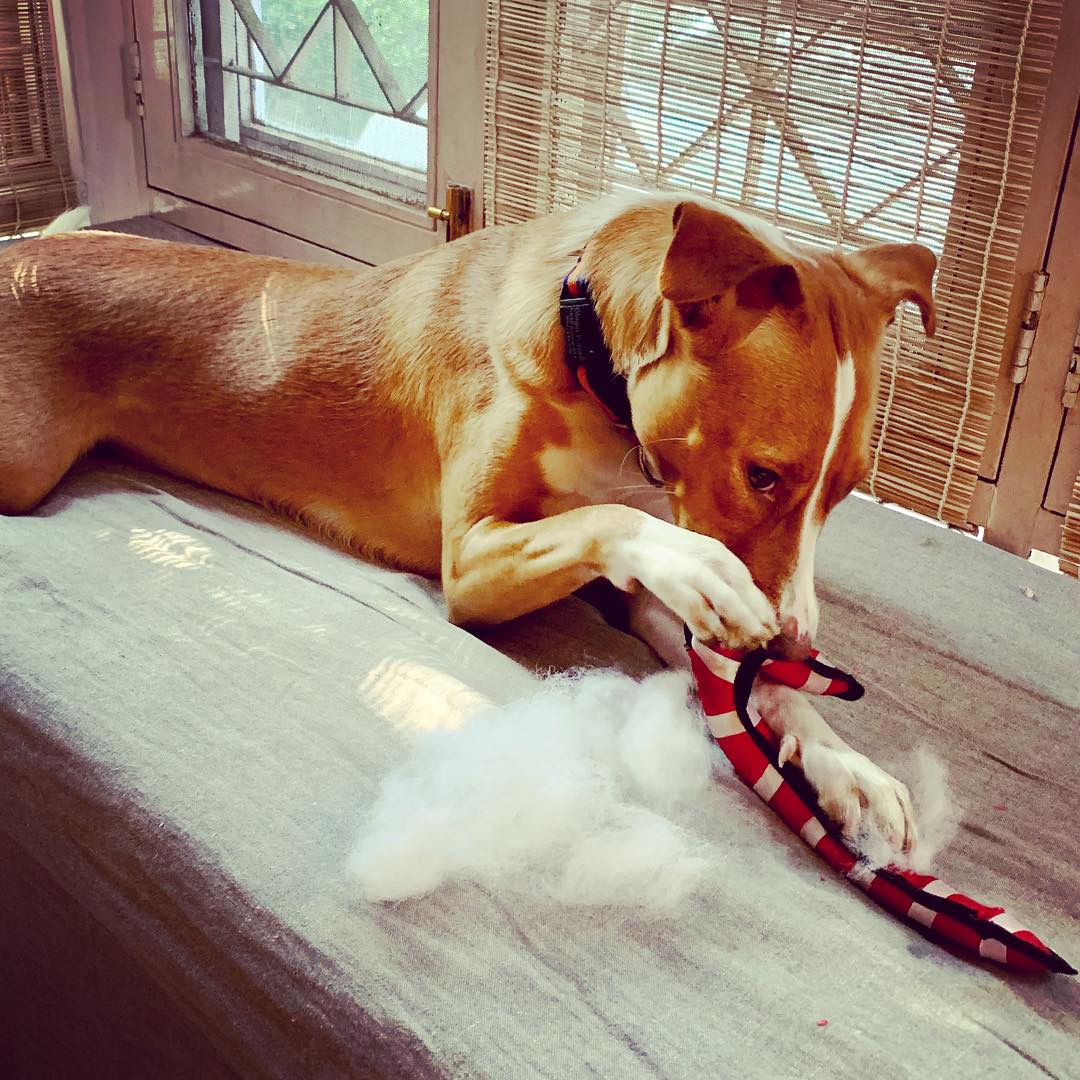
Ginger got a candy cane dog toy, which, because she is a #PowerChewer, lasted all of ten minutes!
Hi. I'm Newley Purnell. I cover technology and business for The Wall Street Journal, based in Hong Kong. I use this site to share my stories and often blog about the books I'm reading, tech trends, sports, travel, and our dog Ginger. For updates, get my weekly email newsletter.
I hope your holiday was full of food, friends, family, and festivities.
Ginger got a candy cane dog toy, which, because she is a #PowerChewer, lasted all of ten minutes!
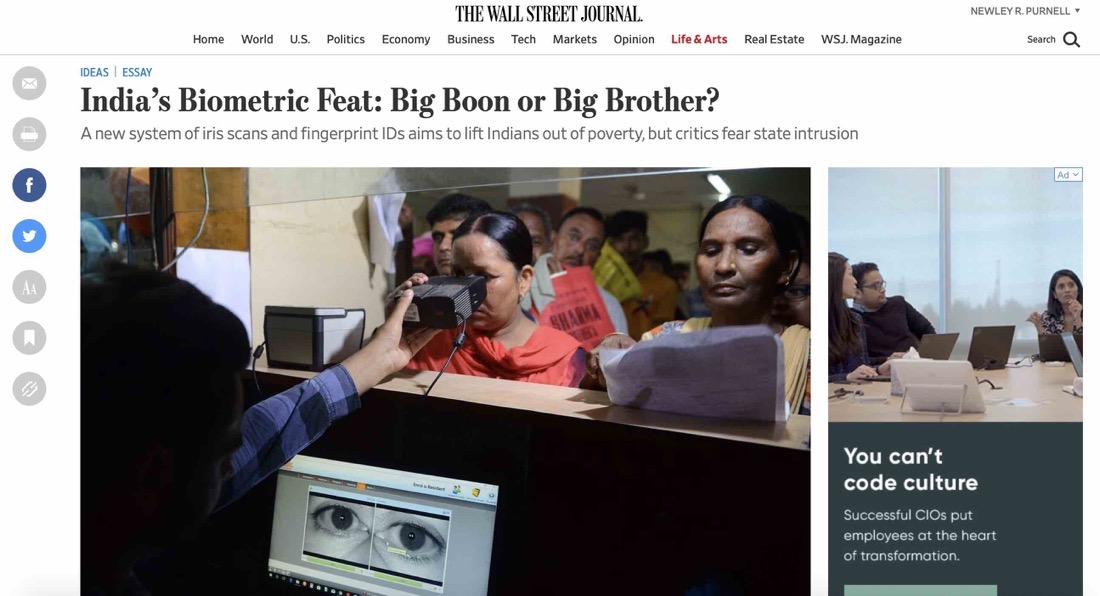
That’s the headline of my most recent story, online here and in Saturday’s print Wall Street Journal.
It begins:
Last July, after virtually every adult in India was connected to the world’s biggest biometric identity database, one of the government officials behind it issued a challenge. R.S. Sharma, who oversees the country’s telecom regulatory agency, publicly disclosed his personal ID number in the system and taunted skeptics and potential hackers. “Show me one concrete example where you can do any harm to me!” he tweeted.
Opponents of the system swarmed, looking to show the dangers of having too much information amassed in one place. They scoured the internet for Mr. Sharma’s personal data by using the ID number to help open digital doors, and claimed some prizes: They uncovered his mobile number and a photo of his daughter and were able to deposit token amounts of money in his bank account. But they couldn’t withdraw funds or corrupt his data, and Mr. Sharma claimed to have proved that the system – which has on file the irises and fingerprints of all of its participants – is secure.
Mr. Sharma’s challenge reflects the tensions over India’s unique feat. It has reached near-completion just as objections to such giant concentrations of personal data have escalated elsewhere around the world, fueled by controversies surrounding Facebook and Google. Reetika Khera, an economist at the Indian Institute of Management Ahmedabad, calls the Indian system “big data meets big brother,” and she and others have aired what they see as its failings, from invasive information-gathering about those within it to dangerous consequences for stragglers left out.
India says its system—built to cover its 1.3 billion people, a sixth of the world’s population—heralds a new model for governments to marshal citizens’ data, ease digital pathways and fuel their electronic economies, especially in the developing world. India’s Supreme Court in September ruled that the program doesn’t violate citizens’ privacy rights, removing a huge shadow over the program. “It’s mind-boggling that a country like India has pulled it off,” said Anil Jain, a Michigan State University professor who studies biometrics.
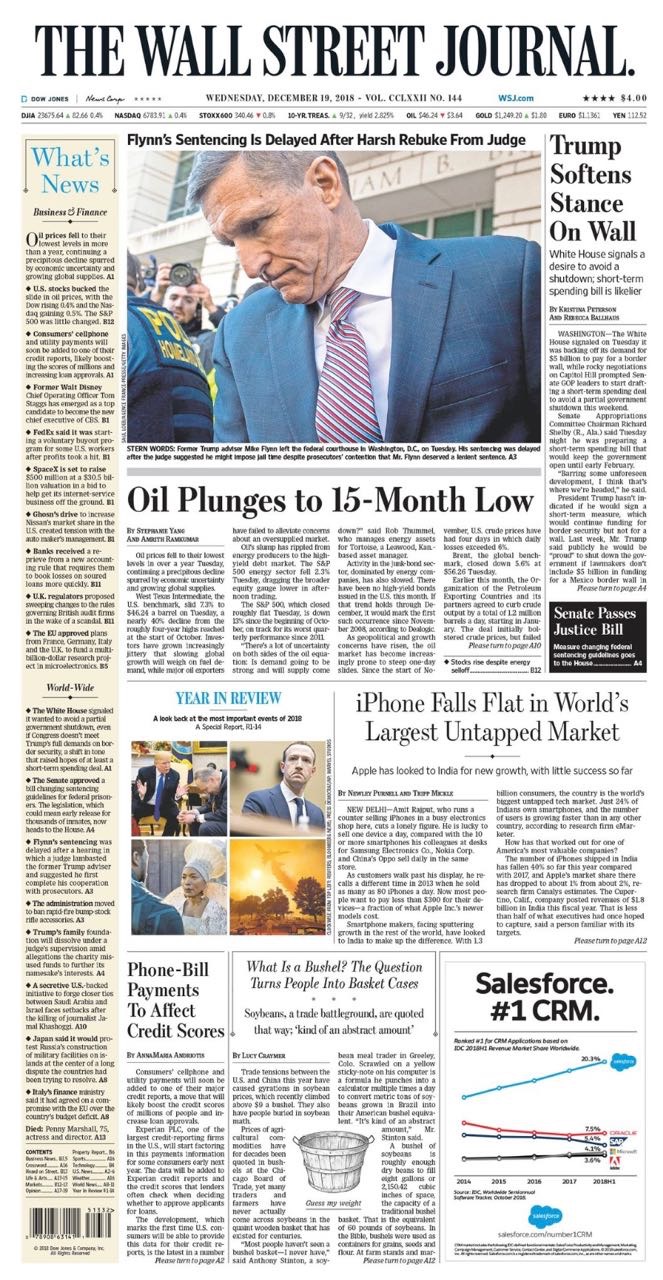
That’s the headline of my most recent story, which I wrote with my WSJ colleague Tripp Mickle. It’s on the front page of Wednesday’s print paper and online here.
It begins:
NEW DELHI–Amit Rajput, who runs a counter selling iPhones in a busy electronics shop here, cuts a lonely figure. He is lucky to sell one device a day, compared with the 10 or more smartphones his colleagues at desks for Samsung Electronics Co. , Nokia Corp. and China’s Oppo sell daily in the same store.
As customers walk past his display, he recalls a different time in 2013 when he sold as many as 80 iPhones a day. Now most people want to pay less than $300 for their devices—a fraction of what Apple Inc.’s newer models cost.
Smartphone makers, facing sputtering growth in the rest of the world, have looked to India to make up the difference. With 1.3 billion consumers, the country is the world’s biggest untapped tech market. Just 24% of Indians own smartphones, and the number of users is growing faster than in any other country, according to research firm eMarketer.
How has that worked out for one of America’s most valuable companies?
The number of iPhones shipped in India has fallen 40% so far this year compared with 2017, and Apple’s market share there has dropped to about 1% from about 2%, research firm Canalys estimates. The Cupertino, Calif., company posted revenues of $1.8 billion in India this fiscal year. That is less than half of what executives had once hoped to capture, said a person familiar with its targets.
“It’s been a rout,” said Ishan Dutt, an analyst at Canalys.

📈 1) How Microsoft Quietly Became the World’s Most Valuable Company [WSJ]
“Microsoft Corp. tried through the years to compete in a range of buzzy consumer businesses, but it was Chief Executive Satya Nadella’s focus on selling humdrum yet fast-growing computing services to companies that allowed it to reclaim the title of world’s most valuable company.”
📧 2) Facebook’s Zuckerberg at Center of Emails Released by U.K. Parliament [WSJ]
“The U.K. Parliament released on Wednesday a trove of internal Facebook Inc. emails that show Mark Zuckerberg and other executives pursuing hard-nosed tactics to stifle competitors, as well as considering a range of possibilities for monetizing the massive amounts of data the company collected on its users.”
🤝 3) The Friendship That Made Google Huge [The New Yorker]
“Coding together at the same computer, Jeff Dean and Sanjay Ghemawat changed the course of the company – and the Internet.”
🎉 4) Instagram Is the New Evite [The Atlantic]
“Here’s how it works: When teenagers are planning a big party, they’ll sometimes create a new Instagram account, often with a handle that includes the date of the party, like @Nov17partyy or @SarahsBdayOctober27. The account will be set to private, and its bio will list the date of the party and sometimes the handles of the organizers.”
🎧 5) An appreciation of the long-lost MP3 player skins of yesteryear [BoingBoing]
Winamp was infinitely customizable, and there was an exuberant practice of coming up with MP3 player skins (some of Winamp’s competitors adopted its skin format, making the skins interoperable among different players), and sites devoted to featuring
🎥 6) The Best Movies of 2018 [The New Yorker]
“The gap between what’s good and what’s widely available in theatres – between the cinema of resistance and the cinema of consensus – is wider than ever.”
Related: Five good SF/F films from 2018 (that you probably missed) [Factor Daily]
🔭 7) The Best Science Books of 2018 [Five Books]
“As life on Earth is rocked by conflict and environmental crisis, these serene little scientific emissaries remind us of how different it can be when we collaborate selflessly in the getting of knowledge.”
Related: Here are the Biggest Fiction Bestsellers of the Last 100 Years [Literary Hub]
🔨 8) The Trade Journal Cooperative [TradeJournalCooperative.com]
“Our editors painstakingly comb through the back alleys of capitalism to bring you fascinating publications like Pasta Professional, American Funeral Director, and Plumber Magazine.”
🦆 9) Quackarazzi: Mandarin duck holds NYC in its spell [AP]
“A horde of photographers has been gathering daily in the park off Fifth Avenue for well over a month, hoping to catch a glimpse of the exotic bird with pink, purple, orange and emerald green plumage and markings that admirer Joe Amato compares to ‘a living box of crayons.’”
🎩 10) Dog-related link of the week: Who Let the Dogs Out (at the Wedding)? Readers Respond [NY Times]
“We asked our readers to submit photos of their dogs, cats and even birds dressed in fancy wedding fashion. Here’s what they shared.”

📹 In NN 154 I mentioned a blog post I wrote about a climbing documentary on Neflix I liked called “Valley Uprising.”
I’ve got another Netflix doc to recommend: “Get Me Roger Stone.” It came out last year but Anasuya and I just watched it last night.
It’s about the career of the notorious (a designation of which he would approve) political strategist and lobbyist, beginning with his work on the Nixon campaign and continuing through President Trump’s election.
(It’s especially timely given Robert Mueller seems to be investigating links between Stone, Wikileaks, and the release of stolen Hilary Clinton emails.)
On to this week’s NN.
🔬 1) Chinese Scientist Claims World’s First Genetically Modified Babies [WSJ]
“Scientists and doctors in China and abroad swiftly rebuked Dr. He after the Associated Press first reported the news of the births on Monday. The global scientific community has previously voiced concern that China is racing ahead with gene-editing experiments without adequate regulation or oversight.”
🖥️ 2) The End of the Beginning [YouTube]
“In his now annual state-of-innovation talk at the a16z Summit in November 2018, Andreessen Horowitz’ Benedict Evans walks through where we are now in software eating the world… and how things may continue to change over the next 10 years.”
💊 3) Are You Sitting Down? Standing Desks Are Overrated [New York Times]
“Research…suggests that warnings about sitting at work are overblown, and that standing desks are overrated as a way to improve health.”
🤗 4) Teens Say Social Media Isn’t As Bad For Them As You Might Think [Buzzfeed]
“Seriously: 81% of teens said it makes them feel more connected to friends, 71% said it helps them show their creative side, 69% said it helps them make friends and with a more diverse group of people, and 68% feel like they have people who support them through tough times.”
📚 5) The 10 Best Books of 2018 [NY Times]
“The editors of The Times Book Review choose the best fiction and nonfiction titles this year.”
📅 6) Forget the chocolate: Advent calendars go for booze, cheese [AP]
“They’re meant to appeal to nostalgic adults who want to count the days till Christmas with something other than sweets. They’re sold for a limited time, get major social media buzz and tend to sell out quickly.”
☠ 7) The Google Cemetery [Gcemtery.co]
“A total of 44 products have been sent into oblivion.”
🎿 8) James Niehues: The Man Behind the Map [Kickstarter]
“Jim has extensively researched, photographed and illustrated nearly every ski map used in North America over the last three decades.”
🥔 9) Driver: I wasn’t on my phone, I was eating a hash brown [AP]
“A Connecticut man who says he was wrongly cited for distracted driving after police mistook a McDonald’s hash brown for a cellphone is continuing his legal fight.”
🐾 10) Dog-related video of the week: Dog’s unbridled joy for soldier’s homecoming goes viral, brings smiles [ABC News]
“Cassandra Cabrera deployed to Africa when her beloved Miss May was just a puppy. She was worried that by the time she returned, her best friend wouldn’t remember her.”
👊 Fist bump from New Delhi,
Newley
November 4th marked one year since we adopted Ginger.

If you missed my post from March, here’s the backstory and some pics of her as a puppy. This was the day we got her:

To recap: She is a New Delhi street dog and displays many of the characteristics of desidogs (also known as Indogs or Indian pariah dogs.)
Now almost a year and a half old, she is fully grown, weighing about 20 kg (45 pounds).
She is an alert, cautious, playful, smart, athletic, and affectionate dog.
She is also quite protective of our house, springing into action and barking if anyone unfamiliar rattles our gate.
She also loves to play fetch.
She is a powerful jumper.
She doesn’t demand to be by our sides constantly, but does enjoy sleeping near (or sometimes directly on) us.
Oh, and she definitely has a mischievous streak. She seems to enjoy nothing more than stealing a shoe or a sock as I sit down to put them on before leaving for the office in the morning, prompting me to chase after her (which is no doubt the point of the “game” for her).
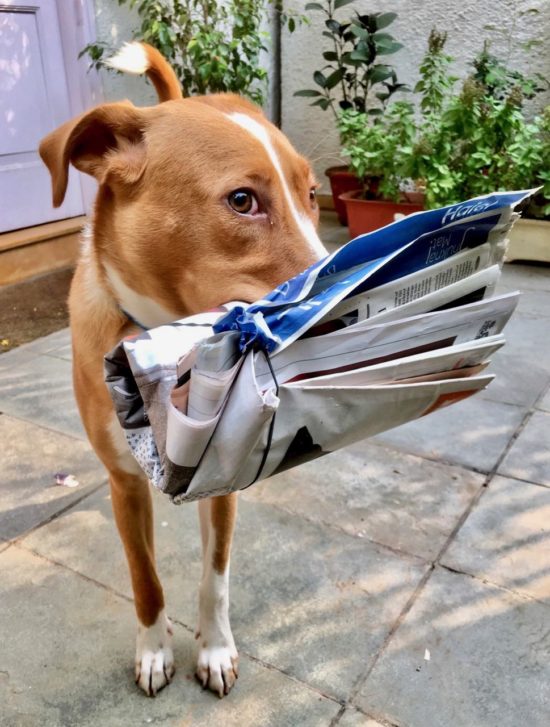





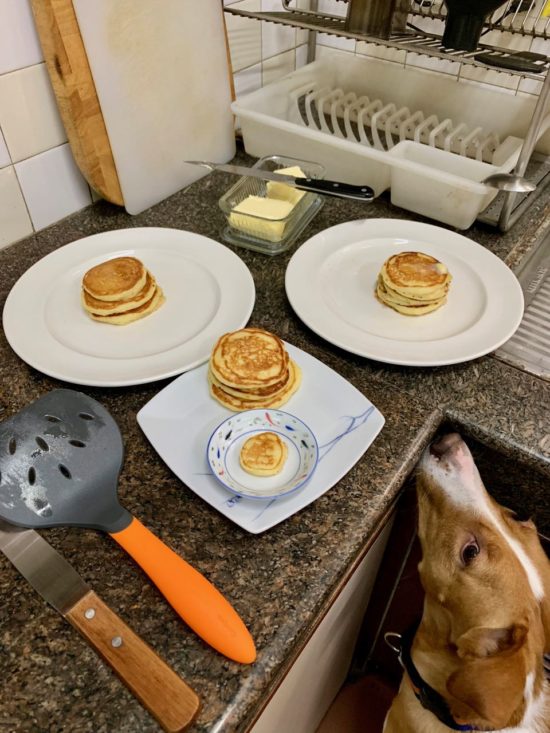
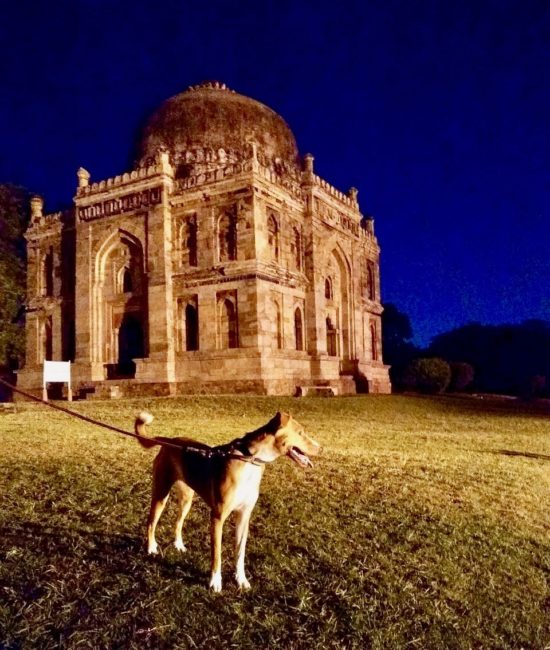
If you’re interested in adopting a desi dog here in New Delhi (or just want to donate to a good cause) check out the Indian Canine Uplipftment Centre, or ICUC, where we got Ginger.
They do great work rescuing pups and providing medical services to the city’s huge population of strays.
We’ve also had some very informative training sessions with Namratha Rao of Pawsitive Tales. She really knows the breed well and is highly skilled. Get in touch with her if you have any dog training needs.
Here’s to 2019 and beyond with Ginger!

⛔ 1. By me and my colleague Sarah Nassauer: Walmart’s Flipkart CEO Steps Down in Wake of Misconduct Allegation. Binny Bansal, an India startup icon, is out.
💰 2. Also by me, with my colleague Corinne Abrams: India’s Top Payments App Faces Challenge From Google and WhatsApp. The lede:
India’s biggest mobile-payments startup, Paytm, has wooed hundreds of millions of users and attracted investment from Warren Buffett’s Berkshire Hathaway Inc. The biggest challenge for its charismatic founder, 40-year-old Vijay Shekhar Sharma, lies ahead: Keeping Alphabet Inc.’s Google and Facebook Inc.’s WhatsApp at bay as they push into India, the world’s hottest new market for mobile money.
🌄 3. By me at Newley.com: Excellent Climbing Documentary: ‘Valley Uprising’ — Worth a watch, even if you’re not into the sport.
🔍 4. Shot: Big tech story this week: Delay, Deny and Deflect: How Facebook’s Leaders Fought Through Crisis [NY Times]. Here are the Times‘s six takeaways.
😠 5. Chaser: With Facebook at ‘War,’ Zuckerberg Adopts More Aggressive Style [WSJ] — “Mr. Zuckerberg’s new approach is causing unprecedented turmoil atop Facebook, driving several key executives from the company, according to people familiar with the matter,” reports my colleague Deepa Seetharaman.
✈️ 6. Thanksgiving travel-related story of the week: Flying over the Thanksgiving holiday? You could help set a record: [ABC News] — More than 30 million people could travel over Turkey Day weekend this year, a new milestone.
😋 7. Thanksgiving side dish-related graphic of the week: Here’s What Your Part Of America Eats On Thanksgiving [FiveThiryEight] — Wait: Salad?!
👖 8. Fashion-related story of the week: The Sneaky Way Clothing Brands Hooked Men on Stretch Jeans [The Atlantic] — Note: I will keep my Levi’s 501s, thank you. Is nothing sacred?
📈 9. Uplifting chart of the week: Human history, in one chart [Vox] — 2018 got you feeling down? Repeat after me: Things. Are. Getting. Better (in the macro sense)!
👶 10. Dog video of the week: Everything’s terrible, so here’s a kid losing the most adorable fight ever [@RobertMaguire_]. Awesome.
🍰 BONUS THANKSGIVING LINK: Pecan Pie in Singapore? Don’t Mind If I Do! [WSJ, no paywall] — My piece from 2014, featuring my Aunt Cece’s famous pecan pie recipe and other goodies.
👊 Fist bump from New Delhi,
Newley
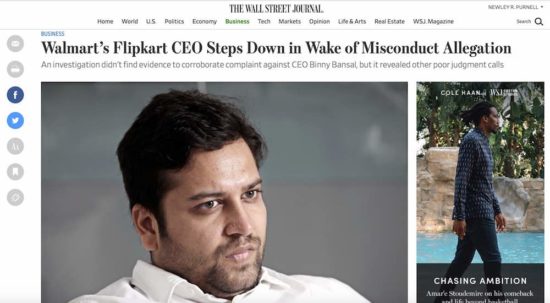
That’s the headline of my most recent story, which I wrote with my colleague Sarah Nassauer, out Tuesday.
Walmart Inc. said the chief executive of Flipkart Group, its Indian e-commerce business, resigned following an independent investigation into a personal misconduct allegation.
Binny Bansal, one of the co-founders of Bangalore-based Flipkart, decided to step down after “recent events risked becoming a distraction,” Walmart said Tuesday.
Walmart opened an investigation this summer after a former Flipkart employee came forward alleging Mr. Bansal had sexually assaulted her sometime around 2016, according to a person familiar with the matter.
During the negotiations this year to sell Flipkart to Walmart, Mr. Bansal didn’t disclose the allegation against him or that he had hired security personnel to privately deal with the matter, the person said.
As part of the investigation, Mr. Bansal told Walmart he had a consensual relationship with the woman and denied he assaulted her, the person said.
Click through to read the rest.

That’s the headline of a story I did with my colleague Corinne Abrams, out Monday.
India’s biggest mobile-payments startup, Paytm, has wooed hundreds of millions of users and attracted investment from Warren Buffett’s Berkshire Hathaway Inc.
The biggest challenge for its charismatic founder, 40-year-old Vijay Shekhar Sharma, lies ahead: Keeping Alphabet Inc.’s Google and Facebook Inc.’s WhatsApp at bay as they push into India, the world’s hottest new market for mobile money.
Paytm’s popular smartphone app, which can be used to pay for everything from auto-rickshaw rides to movies and utility bills, handles some 500 million transactions a month across its network. Paytm, launched in 2010 by Mr. Sharma’s One97 Communications Ltd., has dominated India’s payments space since late 2016. That is when Prime Minister Narendra Modi nullified India’s largest-denomination notes to curb corruption, triggering a cash crunch. Faced with long lines for ATMs, consumers flocked to the Paytm app.
Click through to read the rest.

I love 1) sports/crazy athletic achievements, and 2) documentaries, so the 2014 film “Valley Uprising” had long been on my list of movies to watch.
I finally checked it out on Netflix. I really liked it. It outlines the emergence of climbing icons and the techniques they employed from one generation to the next in California’s stunningly beautiful Yosemite Valley.
There are brash climbers, philosophical ones, stoners, alcoholics, crazy parties, plane crashes, run-ins with park rangers, a beloved homeless guy and more. The soundtrack is great. And there are some cool animations of still photos pulled from various archives.
I knew that Yosemite was a climbing mecca — when I was 18 a friend and I did the day hike up the back of Half Dome, which is like 0.01% as daring as what the stars of “Valley Uprising” undertake — but I never knew about its history.
Certainly worth a watch, perhaps as a prelude to “Free Solo,” the new documentary about Alex Honnold (who features in “Valley Uprising” as embodying the newest generation of Yosemite stars) and his rope-less Half Dome summit that seems to be generating some buzz.