Simply amazing. Turn up your speakers and enjoy.
(Via BoingBoing.)
Hi. I'm Newley Purnell. I cover technology and business for The Wall Street Journal, based in Hong Kong. I use this site to share my stories and often blog about the books I'm reading, tech trends, sports, travel, and our dog Ginger. For updates, get my weekly email newsletter.
Simply amazing. Turn up your speakers and enjoy.
(Via BoingBoing.)
Whiskeytown Falls is clearly no Tsangpo, but great to see that discoveries can be made close to home, even in places we think we know well.
I am a passionate believer in the importance of Web design usability. Web sites, more than anything else, should be easy to use. Simple. Straightforward. Focused. No bells and whistles.
In my work as a Web strategist for nonprofits, I often argue for Web usability from an aesthetic and functional standpoint: people like the way simple Web sites look, and such sites communicate information more efficiently than cluttered ones. Web sites that are visually initimidating are frustrating to navigate.
But needlessly fancy Web design also has financial implications.
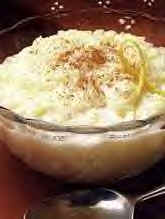
I was talking to my buddy Benny C. last night, and the subject of a gourmet rice pudding restaurant in New York City (yes, you read that right) came up. Our pal David Z. visited the place and sent their link around to us the other day and raved about it.
So Benny, being a foodie, went to the restaurant’s site and tried to place an order for some $50 worth of rice pudding. Note that I said tried — the joint’s awful Web site, which features music and dreadful flash animations, was so complicated that he couldn’t figure out how to buy their pudding — and Benny’s a very smart guy. But he got frustrated and gave up.
Think about that. The restaurant, which I’m sure provides an excellent product, went from having a complete stranger evangelize them — our friend sending their link around and talking them up — to losing a $50 sale and the future business of a potential customer. And all because whoever built their site was more concerned with coolness than effectiveness.
It’s a shame, if you ask me.
Breaking news from Peru, which I recently mentioned in reference to the Failed States Index Map*:
CNN:
LIMA, Peru (Reuters) — Peruvian President Alejandro Toledo said Thursday he had asked all his ministers to tender their resignations and would evaluate who would stay on in their jobs.
The government was plunged into crisis earlier when Prime Minister Carlos Ferrero quit, following the appointment of Toledo’s controversial top ally, Fernando Olivera, as foreign minister.
Housing and Construction Minister Carlos Bruce also resigned immediately.
Bruce and Ferrero both publicly split with Olivera over legalizing some cultivation of the raw material for cocaine, and their resignations signal more turbulence ahead for the unpopular Toledo in his final months in office.
Under Peru’s constitution, once a prime minister resigns all ministers must tender their resignations.
The story’s still developing; the only other report I can find at the moment is from the BBC.
Stay tuned…
*Maybe those folks at Foreign Policy know what they’re talking about after all…
UPDATE: The the AP has this report, but other than that there’s been nary a peep in the daily papers — the WaPo has nothing at all, and the NY Times has only a paragraph.
Thnk god. Txting rulz. Mre ppl shld txt. I luv it.
WSJ: “Text Messages Sent by Cellphone Finally Catch On in U.S.”
But seriously, I find it funny that teenagers and young adults today, who older people assume to be dumbed-down by too much TV and video games and too few books, are much quicker to adopt reading/writing-based media like texting and Web surfing and email and instant messaging and blogs. Newer technologies that older people might naturally associate with mindlessness are nevertheless based on reading and writing, not talking.

BBC:
Malaysia has announced a state of emergency in two towns after air pollution reached dangerous levels.
The pollution is blamed on fires lit to clear land in neighbouring Indonesia, seriously affecting air quality and visibility across the Malacca Strait.
Air quality readings taken in the two towns showed pollution markers to be above the emergency level of 500.
The haze has prompted hundreds of schools to shut, as well as disrupting airports and busy shipping lanes.
During my time teaching small kids (ages 5-10) in Taiwan, I was continuously searching for ways to entertain them — silly games, jokes, physical comedy routines incorporating juggling, etc. After a month or two, I hit upon a brainstorm: I needed a classroom mascot.
In the teacher’s room one day during a break, I came across the perfect candidate in the recesses of an old bookcase: a plastic spider left over from the previous year’s Halloween celebrations. I scooped him up and, when class resumed, introduced him to my students.
Miles the spider was born. (I named him after one of my best friends from college, Miles B., who in fact doesn’t resemble a small arachnid at all, for he is 6’6″ tall weighs about 280 pounds.)
The kids took to him slowly; they thought I was certifiable when I insisted, time and again, that in fact Miles was not an inanimate toy, but instead a 29-year-old lifetime pet (I said my parents gave him to me as an infant, and that he’d made the journey with me to East Asia). Once my ever-serious students finally warmed up to Miles, I incorporated him into various classroom activities — for example, I’d have my more advanced classes write 10 sentences about Miles using adjectives (Peggy, one of my more stubborn pupils, would invariably submit sentences like “Miles is Teacher Newley ugly stupid toy spider.”)
In one of my older classes, a feisty girl named Chia-ling constantly insisted that I was nuts; she insisted Miles was not a real spider. One afternoon, we were talking about our weekends; the students asked me what Miles did last weekend. I said he’d told me that he’d managed to open the classroom’s sliding glass door, venture out onto the balcony, and stare at the beautiful stars one night.
“Teacher, you a liar!” Chia-ling said. “You cannot see the stars at night in Kaohsiung! Miles is not a real spider — he is a toy!” (Indeed, Chia-ling was right: the city’s air pollution made the
prospect of star-gazing ludicrous.)
Toward the end of the year, the students really became enamored of Miles; I let him take our daily “oral tests” (I’d hold a book up over my face and repeat vocabulary words in a squeaky voice, and the students would always scurry out from behind their desks and attempt to catch me out in my ventriloquism). I’d even write Miles’s name up on the board, along with all the other students’, and assign him an oral test grade. The more studious children would always listen intently and rat out Miles’s pronunciation gaffes in an attempt to lower his grade sufficiently so he’d have to stay after class for “extra practice.”
Miles, in time, became perhaps the best-loved class mascot in the history of Taiwanese private English language education. One day, a quiet girl name Annie even brought in one of her Barbies from home and proclaimed the doll to be Miles’s girlfriend. (I did not draw attention to the sexual perversion of such an intra-species romance.)
Here, alas, is a photo of one of my classes in front of my whiteboard. Miles is visible in the upper left-hand corner (though I’m afraid he’s a bit blurry):


…with custom chrome emblems.
(Link via Kottke.)
(Personally, when I go shopping for bling, I go straight to this site. Don’t hate the playa hate the game.)