Categories
HOWTO Misc.

How to transfer domains from GoDaddy to DreamHost

I wrote the following text a few months back, and in an effort to publish some long-neglected drafts, I decided I’d dust it off and share it.

My Web host is DreamHost, but a while back I registered several domain names at GoDaddy.com. I’m happy with Dreamhost and figured I’d consolidate my domain names and hosting with one service.

While others have various complaints with GoDaddy, I simply found their Web site and user experience to be unwieldy. So here’s what I did. Note that some steps might be slightly different now, but I think the process is mostly the same:

From Godaddy.com

  1. Log in to your account at GoDaddy.com using the fields at the top of the home page.
  2. Mouse over the Domains tab on the top left, and click Domain Management under My Account, on the right.
  3. Click on the domain name itself (not any of the icons to the right), which will bring you to the Domain Details page.
  4. If your domain name is locked, click the Manage link to unlock it. If you use private registration, turn this off.
  5. You will receive an email from Go Daddy several hours later called Item Cancellation Confirmation. You don’t need to wait for this email, though.
  6. Meanwhile, you will receive, in a few minutes, an email called Domain Status Change Notification. You don’t need to do anything. Just review it to make sure it says your domain name has been unlocked.
  7. Go back to the Domain Details page, and to the right of Authorization Code, click Send by Email.
  8. In a few minutes, you will receive an email called “DOMAINNAME>>Information you requested.” In the email, copy the authorization info.

To Dreamhost

  1. In a new tab or window, log in to the DreamHost control panel via the home page, and click Reg. Transfer, under the Manage Domains heading on the left side. You will be charged $9.95 for each domain you want DreamHost to manage, but that includes a one-year renewal.
  2. In the box labeled “Transfer domain registration(s) to us,” enter your GoDaddy domain name and click request transfer. This will take you to a new page that will ask for your transfer authorization code.
  3. Go back to GoDaddy’s domain manager. Move your cursor over the Domains tab in the upper left corner and click Pending Transfers. Click the box next to your domain name and click Accept/Decline above. Click OK twice.
  4. In 15 or 20 minutes, you’ll receive an email from DreamHost with the subject line Domain Registration Transfer COMPLETED for DOMAIN NAME. The email will contain a link to your domain name. You can visit the site now, but it may take a few minutes to bring up the DreamHost parked page.
  5. You should now see the domain name listed in your DreamHost panel. You can now add hosting, if you want.
  6. You will receive an email from Go Daddy with your domain name in the subject line telling you that the transfer is complete. You will receive a second email with “Your Recent Domain Name Transfer” in the subject line saying “sorry to see you go.” You don’t need to do anything.
Categories
Misc.

Thailand flooding: maps and details

Note: This post is from March, 2001. For more posts about flooding in Thailand as of Sept./Oct., 2011, see the Thailand Flooding tag.

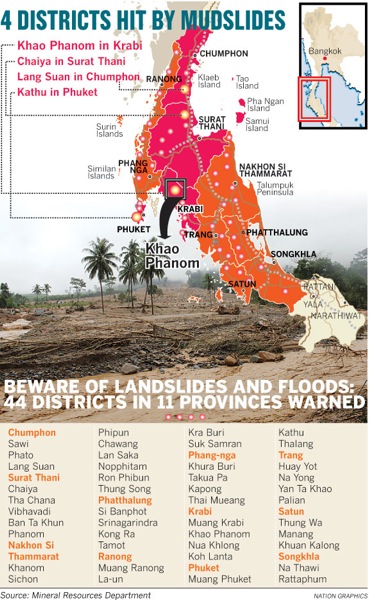
First, here are maps of the affected areas, as these seem to be in high demand. This is from the Bangkok Post:

2011 03 31 krabi map

And there’s this more detailed graphic, from the Nation:

2011 03 31 thailand flooding nation

The details:

AP: “Floods trigger southern Thai landslides; 15 dead.”

Southern Thailand faced more torrential rain after heavy downpours caused at least 15 deaths and forced the Thai navy to help evacuate hundreds of tourists stranded on some of the country’s famous resort islands.

Reuters: “Flooding in Thailand kills 21, strands thousands”

Severe flooding and mudslides in southern Thailand have killed 21 people, stranded thousands of tourists and threatened to delay shipments of rubber in the world’s largest rubber-producing country, authorities said on Wednesday.

Trains to the region have been cancelled and three airports have been shut, including one on the popular island of Koh Samui. As well as Koh Samui, foreign tourists have also been stuck at resorts in Krabi and Koh Phangan.

Bangkok Post: “Krabi mudslides kill 3 villagers; Death toll from southern storms and floods hits 15.”

At least 3 people have been killed and six others are reported missing as mudslides swept away villages and heightened the southern flooding crisis. The overall death toll has risen to at least 15.

Mountain run-off and landslides hit villages in tambon Na Khao in Krabi’s Khao Phanom district yesterday and washed away up to 50 homes, provincial governor Prasit Osathanont said.

Hours after the landslides struck, rescue workers were still sifting through the mud in a desperate search for other victims.

And:

In Samui, hundreds of stranded travellers scrambled for air tickets at Samui International airport, after two planes managed to take off for Bangkok.

The Nation:

Massive landslide destroys 100 households in Khao Phanom district; many still missing; Floods continue to wreak havoc; 710,000 now affected; Satun and Phuket get warning

Days of downpours yesterday triggered a leviathan landslide that swallowed up an entire village of about 100 households in Krabi’s Khao Phanom district, leaving 10 residents reported dead and many more missing.

Today’s Bangkok Post has this item: “Airlines resume flights to flood-hit Samui.”

Bangkok Airways and Thai Airways International have resumed most of their regular services to Koh Samui as stormy weather starts to clear, relieving frustration among passengers.

Bangkok Airways operated 19 flights yesterday to carry about 2,000 passengers off the flood-stricken island.

Thai Airways made three flights to Samui and transported 600 passengers who were stranded on the island after heavy flooding closed the island’s airport.

Bangkok Airways, which operates the largest number of flights through Samui, on Tuesday cancelled all 53 incoming and outgoing flights.

The affected routes by the carrier included Bangkok-Samui, Chiang Mai-Samui, Phuket-Samui, Krabi-Samui, U-tapao-Samui, Hong Kong-Samui and Singapore-Samui.

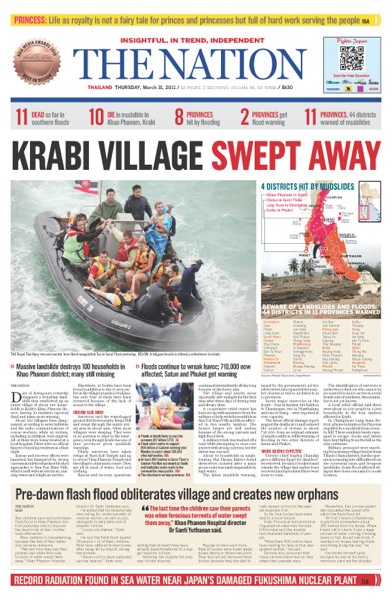
Todays’ Nation front page:

2011 03 31 thailand flooding

And here’s a YouTube video of Krabi flooding:

(Nation front page image: Twipic by LeroyNewsDesign. YouTube video via GlobalPost.)

Have a good link to share, or want to receive updates? Follow me on Twitter: @newley.

Categories
Misc.

More Japan links

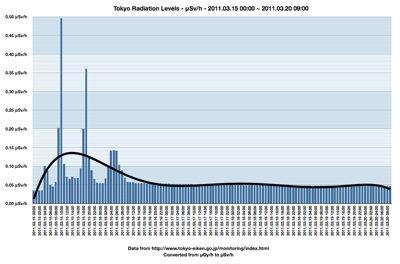
2011 03 20 tokyo radiation levels

A few more Japan-related links to share, and then I’ll likely turn back to Thailand and other subjects:

(Chart via http://fleep.com/earthquake.)

Categories
Misc.

Japan crisis: aid groups, Asian manufacturing, and Thai elections

Three items that have caught my eye of late:

WSJ:

Aid Groups Temper Their Contribution

International relief organizations are raising donations, delivering water and blankets, and setting up children’s centers to aid victims of the earthquake and tsunami in Japan.

But compared with last year’s earthquake in Haiti or the 2004 Indian Ocean tsunami that killed more than 200,000 people, they are holding back much of their most ambitious aid-giving.

They say that is partly because Japan, one of the world’s wealthiest nations, has the ability to deal with the disaster’s aftermath largely on its own—and partly because the government hasn’t asked for much aid from many groups.

Still, harsh conditions, including destroyed infrastructure and fears of radiation, are hampering relief efforts, and despite Japan’s considerable skills, many needs aren’t being met. Nearly half a million people are camped out in about 2,500 refugee centers that have been set up in public buildings such as schools and are surviving on basic rations.

CSM:

What the Japan crisis means for Asian manufacturing hub

Across East Asia, people have been on edge over the risk of deadly radiation spreading from Japan. While that possibility is still remote, the ripples from a severe economic blow to Japan may prove more lasting for developing countries that depend on Japanese trade and investment.

Economists say it’s too early to know the full financial impact of Friday’s magnitude 9.0 earthquake and subsequent tsunami, given the evolving nuclear-plant crisis. However, Barclays Capital has estimated that the total cost could exceed 3 percent of Japanese GDP. This would mean an increased burden on Japan’s government, which is already heavily indebted, and on Japanese companies that must replace destroyed assets.

Bangkok Pundit:

How will Japan disaster affect the upcoming Thai election?

As we know, an earthquake and then a tsunami hit Japan last Friday causing the death of thousands and the displacement of hundreds of thousands, but this is a blog about Thai politics so ultimately the question is, what is the impact on Thailand and particularly the upcoming Thai election? (the election will most likely to be held on June 19, June 26 or July 3 after Prime Minister Abhisit Vejjajiva announced that parliament will be dissolved in the first week of May).

Categories
Misc.

Explaining Japan’s nuclear crisis

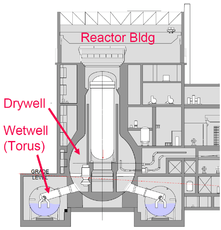
2011 03 16 mitnse

Quick note: Here are two sites I’ve come across that help explain, in technical terms, what’s happening with Japan’s nuclear reactors.

  • Mitnse.com, from MIT’s Department of Nuclear Science and Engineering, has status updates, background information, and diagrams like the one you see here.
  • The Neutron Economy, a blog by what appears to be scientists in the U.S., has links to good explainer pieces and other info.

And a reminder: Here’s my Japan news Twitter list. It’s got 39 feeds, and I’ll continue to add more.

Categories
Misc.

English language TV coverage from Japan’s NHK

Japan’s NHK World TV offers, on its Web site, live English-language coverage of Japan’s unfolding nuclear crisis.

But if you have trouble viewing that feed — as I’ve had here in Thailand — you can also find the stream here, on the NICO NICO live site. You’ll find pictures and some details here that don’t seem to be available on other networks.

Meanwhile, the latest text stories:

  • NYT: Japan Faces Prospect of Nuclear Catastrophe as Workers Leave Plant
  • AP: Japan faces serious radiation leak from quake
  • WSJ: Nuclear Risk Rising in Japan
  • And for ongoing links to various resources, Japan-based Michael Gakuran @gakuranman is maintaining a Great Tohoku Earthquake page on his site.
Categories
Misc.

More on Japan earthquake and tsunami

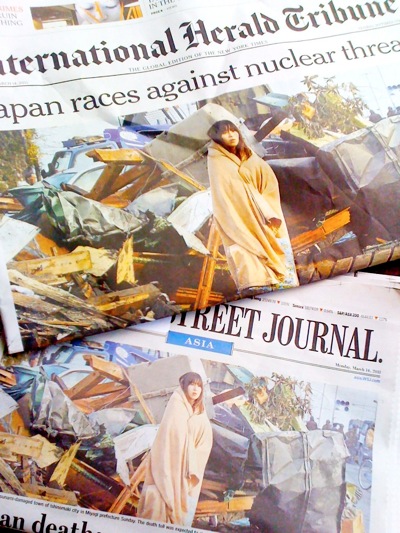
2011 03 14 iht wsj

The latest on Japan:

(Image above: today’s WSJ and IHT feature the same moving photo of a woman standing amid wreckage.)

Categories
Misc.

Resources for following the Japan earthquake news

Here are a few resources I recommend for following the Japan news online:

  • This AP story does a good job of summarizing the day’s events.
  • This BBC News live blog has running updates.
  • The WSJ also has a live blog.
  • A few journalists on Twitter I recommend following are: @TomokoHosaka (AP); @JaymesSong (AP); @AkikoFujita (ABC News); @W7VOA (VOA); and
    @sandrajapandra (freelance). I’ve also created this Japan earthquake Twitter list with additional folks. I’ll continue updating the list.
  • Categories
    Misc.

    Friedman in Singapore

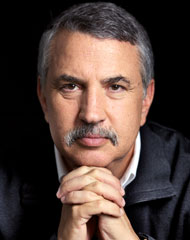
    From the Jan. 29 NYT: Serious in Singapore. Includes observations on economics, public policy, education, and more:

    2011-01-31_friedman.jpg

    I am in the Gan Eng Seng Primary School in a middle-class neighborhood of Singapore, and the principal, A. W. Ai Ling, has me visiting a fifth-grade science class. All the 11-year-old boys and girls are wearing junior white lab coats with their names on them. Outside in the hall, yellow police tape has blocked off a “crime scene” and lying on a floor, bloodied, is a fake body that has been murdered. The class is learning about DNA through the use of fingerprints, and their science teacher has turned the students into little C.S.I. detectives. They have to collect fingerprints from the scene and then break them down.

    I missed that DNA lesson when I was in fifth grade. When I asked the principal whether this was part of the national curriculum, she said no. She just had a great science teacher, she said, and was aware that Singapore was making a big push to expand its biotech industries and thought it would be good to push her students in the same direction early. A couple of them checked my fingerprints. I was innocent — but impressed.

    This was just an average public school, but the principal had made her own connections between “what world am I living in,” “where is my country trying to go in that world” and, therefore, “what should I teach in fifth-grade science.”

    I was struck because that kind of linkage is so often missing in U.S. politics today. Republicans favor deep cuts in government spending, while so far exempting Medicare, Social Security and the defense budget. Not only is that not realistic, but it basically says that our nation’s priorities should be to fund retirement homes for older people rather than better schools for younger people and that we should build new schools in Afghanistan before Alabama.

    (Image: New York Times.)

    Categories
    Misc.

    New Chronicle story on fund raising in Singapore

    I’ve got a new story in the global edition of The Chronicle of Higher Education. It’s called “Starting From Scratch: Fund-Raising Lessons Learned in Singapore.”

    The first few graphs:

    Mention fund raising in Singapore, and one person’s name inevitably comes up: Kheng Chuan Chew. He has become practically synonymous with big donations to the country’s finest universities and is widely considered to have pioneered a practice that was virtually nonexistent a decade ago in much of Southeast Asia.

    In 2003 Mr. Chew, known as K.C., opened the first fund-raising office for the National University of Singapore. In just five years, the university raked in more than $1-billion from philanthropists and a government program that matched donations to universities. This was four times the amount raised in the 12 previous years.

    Mr. Chew joined Nanyang Technological University in 2009 to bolster its efforts to raise private funds. The institution this month received roughly $117-million from the Lee Foundation, which was established by a Singaporean businessman. The private donation is reportedly the largest ever to a Singapore university.

    Compared with university fund raising in the West, “we’re relative novices,” says the soft-spoken Mr. Chew. “But 10 years ago, and especially in the last five years, we have suddenly made remarkable advances in programs from a very low base.”

    Historically, Singapore’s alumni and wealthy donors have tended not to support higher education because it was largely viewed as the responsibility of the government. But thanks to Mr. Chew and others, that attitude is changing.