Categories
Journalism

Why Michael Wolff is Wrong about Columbia Journalism School

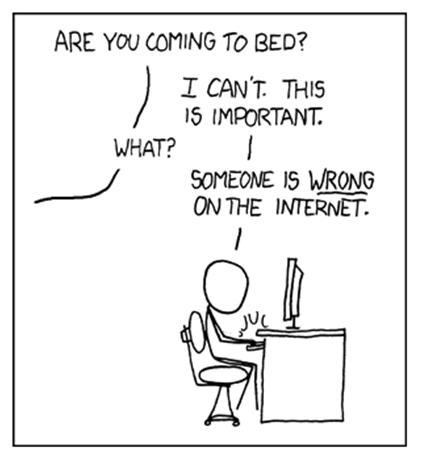
2013 03 25 wrong2

I’ve been meaning, for several months, to provide an update on my experiences here at Columbia Journalism School.

I didn’t expect that my impetus to write would come today in the form of a Michael Wolff column in USA TODAY. But here goes.

Wolff argues that the J-School’s recent appointment of Steve Coll as the new dean, set to take over from Nicholas Lemann this summer, shows that the school is hopelessly misguided.

A hidebound Columbia is failing to modernize, and is neglecting to prepare its students for a bleak job market in the digital world — all while charging massive tuition and fees.

Coll is a “boring” writer, Wolff says, who comes from the decidedly old school worlds of The New Yorker and The Washington Post. And, perhaps even worse, Coll has never Tweeted.

(Wolff neglects to mention that Coll has won two Pulitzer Prizes and has written a total of seven books on topics ranging from the SEC to the Grand Trunk Road to the CIA’s history in Afghanistan.)

I would like to outline what I see as the errors and shortcomings in Wolff’s column.

1. Wolff is wrong about Columbia’s curriculum.

Wolff writes:

Journalism school, especially Columbia’s vaunted program, is often anti-market in outlook. Much of what the market wants, journalism training doesn’t give it. You surely won’t learn at Columbia how to be a tabloid reporter, or an opinionated Fox News host, or an online aggregator, or a brand-name columnist full of brio or bile, or a social or mobile visionary or quant.

This is incorrect. The Journalism School offers classes in online aggregation. It offers instruction in social media. It offers classes in on-air reporting and opinion writing.

And the J-School offers classes in coding — which I should know, because I’m taking a course called “Formats, Protocols & Algorithms: A sampling of journalistic computing.” My classmates and I are learning about Python, APIs, and more.

As for quantitative skills, I took financial accounting last semester and am now studying corporate finance. I have also taken a class in Excel techniques, as well as an investigative skills class in which I learned, among other topics, how best to make use of Freedom of Information Act requests.

2. Wolff is wrong about the school’s approach to career preparedness.

He continues:

Rather, journalism school tends to teach you, admirably or quixotically, many less economically valuable skills: methodological reporting, sourcing protocols, research procedures, and a grounding in ethical and civic responsibility. The ideal goal continues to be to get you a job on The New York Times or The Washington Post, two organizations trying to fire more people than they hire.

First, I’m quite certain that the vast majority of those hiring in the news world do, in fact, value sourcing protocols and ethics.

And second, even glancing at the J-School’s Career Services page reveals an emphasis on preparing students to graduate with the digital and technical skills that employers want.

3. Wolf is wrong in arguing that the school is ignoring the digital news revolution.

He writes:

After many years of avoiding the inevitable, [Columbia] expanded its digital program — curiously hiring a Web editor from London to run it. It now has courses about using data in reporting. But to say it resists the outside world would be kindly.

And:

In a logical if imaginary world, there is no reason why Columbia’s Graduate School of Journalism should not be as vital to the building of the front end of new information forms and relationships as Stanford computing students have been to creating the back end.

Perhaps Wolff missed the January 2012 announcement, available on the Columbia Web site, containing the news that Columbia and Stanford’s engineering school are collaborating to form the Brown Institute for Media Innovation.

To quote the Columbia news item: The Institute “will recognize the increasingly important connection between journalism and technology, bringing the best from the East and West Coasts.”

And perhaps Wolff hasn’t seen the report by Columbia’s Tow Center for Digital Journalism, released last fall, called “Post Industrial Journalism: Adapting to the Present.”

4. Wolff is wrong about Columbia’s professors.

He says:

Many of the school’s teachers continue to be journalists who have lost their jobs, or who have barely had them in the first place, or who are book writers or magazine writers — which hardly represents a job market. Indeed, as the news business shrinks, teaching becomes one of its few growth areas.

My professors have included working journalists from Reuters, The New York Times, and The New Yorker, among other news organizations. And my non-journalist professors have largely been at the top of their academic fields.

To be sure, Wolff has a larger point: The news industry is in a state of ongoing flux. That’s clear.

And as always, it’s fair to debate the merits of attending journalism school, especially an expensive one like Columbia.

But my feeling is that most of my classmates understand the difficult realities inherent in today’s market, yet have come to Columbia to gain in-depth knowledge, to work closely with seasoned pros, and to become better reporters. (And yes, perhaps I’m biased, as I’ve chosen to take a year off from work in order to attend the J-School.)

Despite technological changes, however, I would argue this: Basic reporting techniques, like research and fact checking, remain timeless.

(Image via xkcd.com.)

Categories
Journalism

Self Promotion: New Story about Making FOIA Requests

2012 11 05 c b

I have a new story at CoveringBusiness today. It’s all about filing Freedom of Information Act (FOIA) requests.

Categories
Journalism Tech

Quote of the day…

…computing/search/news edition:

The space-based web we currently have will gradually be replaced by a time-based worldstream.

— From “The End of the Web, Search, and Computer as We Know It,” by David Gelernter in Wired.

Worth a read.

Categories
Journalism Tech

Some of My Favorite Email Newsletters

2013 01 12 email

Last fall I began using email newsletters* to keep abreast of the day’s biggest business and economics stories.

Since I’ve been spending a lot of time in class, mostly away from news sites, I’ve come to appreciate these daily email compilations. Here are a few I like:

  • Reuters Counterparties. This “curated snapshot of the best finance news and commentary” is a stand-alone Reuters Web site edited by Felix Salmon and Ryan McCarthy. You can sign up for the daily newsletter by selecting Counterparties here.
  • Quartz, the new-ish business news site, has a good roundup called the Quartz Daily Brief. (The site hasn’t been loading properly for me for a few days, but you should be able to find the newsletter via the home page.)
  • The Marketplace Newsletter includes links to the well known radio show‘s most most-viewed articles, provides a mid-day update on the markets, and has links to its various episodes.
  • The Bloomberg Most Popular daily email contains just that — the site’s most popular stories of the day. You can sign up here.

In addition, I like two newsletters that don’t focus exclusively on business journalism, but that are generally informative:

*Yes, email newsletters! Remember those? Good ol’ email: Still the Web’s killer app?

(Image via Wikipedia.)

Categories
Journalism

A Look Back at 2012: Some Notable Posts and Stories

2012 has been a memorable year for me.

In addition to writing some stories that I’m quite proud of, I departed Thailand after six years to begin studying for my Master’s in Business and Economics Journalism at the Columbia Journalism School in New York City. (I’m on winter break now and am writing this from Bangkok.)

Here’s a look back at some of my favorite posts from the last twelve months. Some entries are lighthearted, while others are more serious. At the bottom, I’ve linked to a few of my favorite pieces of non-Newley.com writing.

As you’ll see — first things first! — in March, my soccer team won our league. As the year progressed, I posted my notes from Thai Prime Minister Yingluck Shinawatra’s speech to the Foreign Correspondents’ Club of Thailand and blogged about the landmark elections in Myanmar (Burma). And who could forget what happened in May: Lady Gaga arrived in Bangkok.

In New York, I wrote briefly about some of my classes and posted my notes from three memorable talks. First, R. Glenn Hubbard and Jeffrey Liebman, economic advisors to President Obama and Mitt Romney, debated business and economics issues at Columbia. Then Bob Woodward delivered an inspirational speech to Columbia Journalism School students. And I wrote about a talk Google Executive Chairman Eric Schmidt gave at the 92nd Street Y.

And, finally, as the year ended, I blogged about Hurricane Sandy hitting the New York area. (Indeed, it has been quite a year: I didn’t even blog about another two significant events from the fall: President Obama’s re-election and the Sandy Hook Elementary shootings.)

March

April

May

June

July

August

September

October

Other Writings

A couple of stories I wrote for the Wall Street Journal stand out: I reported on some “creative” watering holes in Bangkok and wrote about all things vintage Thailand*.

For Bloomberg BNA, I covered a wide range of issues, from political reforms and economic sanctions in Myanmar to a new rare earths processing plant in Malaysia. (I would link to the pieces, but they’re subscriber-only.)

And finally, this fall I penned a couple of pieces for Covering Business, a Columbia Journalism school Web site. One offered tips for business journalists who want to freelance abroad. The other was about covering tourism industry shocks.

Thanks, as ever, for reading. I always welcome feedback, so feel free to leave a comment or send me an email: newley@gmail.com.

* As I noted earlier, I was happy to see that the nostalgia story was included in WSJ Scene Asia‘s list of their top Asian travel stories of the year.

**Links to all of my stories are on my Journalism page.

Categories
Journalism

Self-Promotion: New Story about Covering Tourism Industry Shocks

2012 11 05 c b

Just a quick note to let you know that I have a new story over at Covering Business, a Columbia Journalism School site.

The piece is called “How to Write About Shocks to the Tourism Industry.”

Categories
Journalism

Self-Promotion: New Story on Freelancing Abroad

2012 11 05 c b

With all of my recent Hurricane Sandy blogging and Twitter curation posts, I neglected to point out a story I wrote last month for Covering Business, a Columbia J-School Web site devoted to business journalism.

The piece is called “Freelancing Abroad: 5 Tips for Business Journalists.”

Enjoy. (And have a look around the rest of the Covering Business site. It’s an excellent resource.)

Categories
Journalism Misc.

Programming Note: I’m Off to NYC for Nine Months

Some news to share, friends:

Next week I’m leaving Bangkok to spend nine months in New York, where I’ll be pursuing my master’s in journalism at Columbia University.

I’ll be in the MA program, which is designed for experienced journalists to focus, in depth, on one area of study. I’ll be in the business and economics concentration.

As far as posting here at Newley.com is concerned, I’ll likely continue linking — though less frequently — to stories about major news events in Thailand. And I’m sure I’ll be writing about my experiences in New York.

I’ll be returning to Asia in the spring, so Thailand friends: I’ll see you on the flip side. U.S. and NYC pals: I look forward to catching up soon.

Thanks, as ever, for reading. And please stay tuned: I’ve got some long-pending posts in the queue that cover a variety of topics, from blogging to nutrition to Mac geekery.

Categories
Journalism Thailand

Self-Promotion: New WSJ Story on All Things Vintage Thailand

I know I said I wouldn’t be posting anything until next week, but I wanted to break my brief radio silence to point out that I have a story online and in the print edition of today’s Wall Street Journal Weekend Journal.

It’s called “Exploring Thailand’s Taste for Nostalgia,” and features some excellent photos by Luke Duggleby. Check it out online here, or grab a copy of today’s WSJ Asia Edition.

Categories
Journalism Tech Thailand

Self-Promotion: New WSJ Southeast Asia Real Time Story about Facebook’s Popularity in Bangkok

The story is here, and begins:

There are more Facebook users in Bangkok than in any other world city. That is the somewhat surprising finding of a global ranking of the social networking behemoth’s users based on their metropolitan areas.

Bangkok has some 8.68 million Facebook users, followed by Jakarta (7.43 million) and Istanbul (7.07 million), according to a list published by the well-known international social media analytics company Socialbakers.

Please give the piece a read and — you knew this was coming — consider “liking” it on Facebook.