Categories
India Journalism Tech

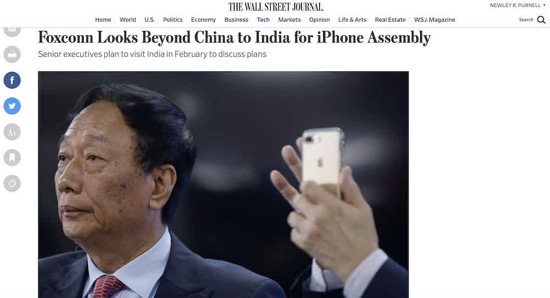
Foxconn Looks Beyond China to India for iPhone Assembly

2019 01 23foxconn

That’s the headline on a story I wrote yesterday with my colleagues Yang Jie, Yoko Kubota, and Rajesh Roy.

It begins:

Apple Inc.’s largest iPhone assembler, Foxconn Technology Group, is considering producing the devices in India, people familiar with the matter said, a move that could reduce Apple’s dependence on China for manufacturing and potentially for sales.

Executives at Foxconn, a contract manufacturer that assembles a large portion of the world’s iPhones in China, are studying whether to include an India project in budget plans, one of the people said. Senior executives, possibly including Chairman Terry Gou, plan to visit India after next month’s Lunar New Year to discuss plans, the people familiar said.

Foxconn’s look at India comes as sustained friction between Washington and Beijing over trade and technology is pushing many companies to consider diversifying their supply chains away from China, a global center of assembly for smartphones, computers and other electronics.

Click through to read the rest.

Categories
Journalism Tech

Facebook’s WhatsApp Limits Users’ Ability to Forward Messages

2019 01 22whatsapp

That’s the headline on my most recent story, out yesterday, with my colleague James Hookway. It begins:

Facebook Inc.’s WhatsApp messaging service is limiting users’ ability to forward content, seeking to curtail ways the popular platform allows the spread of misinformation and sometimes has led to violence.

The move, which follows months of criticism over the company’s response to such incidents, is one of the bigger changes Facebook has made to one of its core services in response to political pressure.

The company said Monday that WhatsApp’s more than one billion global users can now only forward material to five individual users or groups at once, down from 20.

Categories
India Journalism

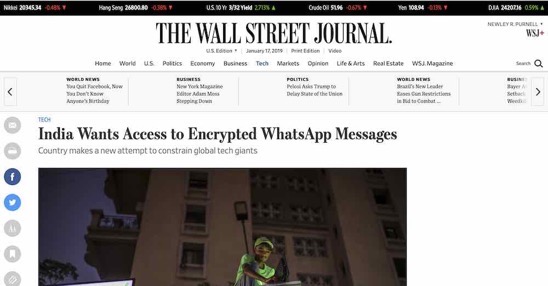
India Wants Access to Encrypted WhatsApp Messages

2019 01 17whatsappindia

That’s the headline on my most recent story, out Tuesday and in Wednesday’s print WSJ. It begins:

NEW DELHI— Facebook Inc.’s WhatsApp is facing pressure in India to let authorities trace and read the encrypted messages of its more than 200 million Indian users in a new attempt at constraining global tech giants.

India’s telecommunications regulator has asked for feedback on new rules that—in the name of national security—could force “over the top” services such as WhatsApp, which use mobile operators’ infrastructure, to allow the government access to users’ messages.

At the same time India’s Information Technology Ministry has proposed new intermediary guidelines that would force WhatsApp and others to trace messages and remove objectionable content within 24 hours.

WhatsApp—which has more users in India than in any other country—has “pushed back on government attempts to ban or weaken end-to-end encryption and will continue to do so,” said a person familiar with the company’s thinking.

Click through to read the rest.

Categories
Journalism Tech

Uber CEO Says Market Turmoil Won’t Derail IPO Plans

2019 01 14uberceo

That’s the headline on my latest story, out Tuesday and in Wednesdsay’s print WSJ. It begins:

Uber Technologies Inc. Chief Executive Dara Khosrowshahi said market turbulence in the U.S. would be unlikely to affect the ride-hailing titan’s plans for a public listing.

“Any company that’s going public would like to do it in a positive, stable market,” Mr. Khosrowshahi said in an interview Tuesday in Singapore. But the startup is large and flexible enough to go public in almost any market, he said. “We’ll do it when we’re ready, and, hopefully, the markets will be in a good state."

Mr. Khosrowshahi said Uber was internally on track to list this year, having previously said he expected to seek a debut in the second half of 2019 in what would be one of the biggest public offerings planned for the year. The company is also keeping an eye out for a possible debut by rival U.S. firm Lyft Inc., which has indicated it plans to seek an IPO this year and filed confidentially with the SEC the same day Uber did.

“The good news is that we’ve got a strong balance sheet so we don’t need to go public this year,” he said. “It’s a desire,” he said, but “if it doesn’t happen it doesn’t happen. “I’d be disappointed and I think our shareholders would be disappointed but the company would be just fine."

Click through to read the rest.

Categories
Journalism Tech

Popular Weather App Collects Too Much User Data, Security Experts Say

2019 01 03weather app

That’s the headline on my latest story, out Wednesday. It begins:

NEW DELHI—A popular weather app built by a Chinese tech conglomerate has been collecting an unusual amount of data from smartphones around the world and attempting to subscribe some users to paid services without permission, according to a London-based security firm’s research.

The free app, one of the world’s most-downloaded weather apps in Google’s Play store, is from TCL Communication Technology Holdings Ltd., of Shenzhen, China. TCL makes Alcatel- and BlackBerry -branded phones, while a sister company makes televisions.

The app, called “Weather Forecast—World Weather Accurate Radar,” collects data including smartphone users’ geographic locations, email addresses and unique 15-digit International Mobile Equipment Identity (IMEI) numbers on TCL servers in China, according to Upstream Systems, the mobile commerce and security firm that found the activity. Until last month, the app was known as “Weather—Simple weather forecast.”

A TCL spokesman didn’t address queries about the amount of data the app collects.

The weather app also has attempted to surreptitiously subscribe more than 100,000 users of its low-cost Alcatel smartphones in countries such as Brazil, Malaysia and Nigeria to paid virtual-reality services, according to Upstream Systems. The security firm, which discovered the activity as part of its work for mobile operators, said users would have been billed more than $1.5 million had it not blocked the attempts.

Click through to read the rest.

Categories
India Journalism Tech

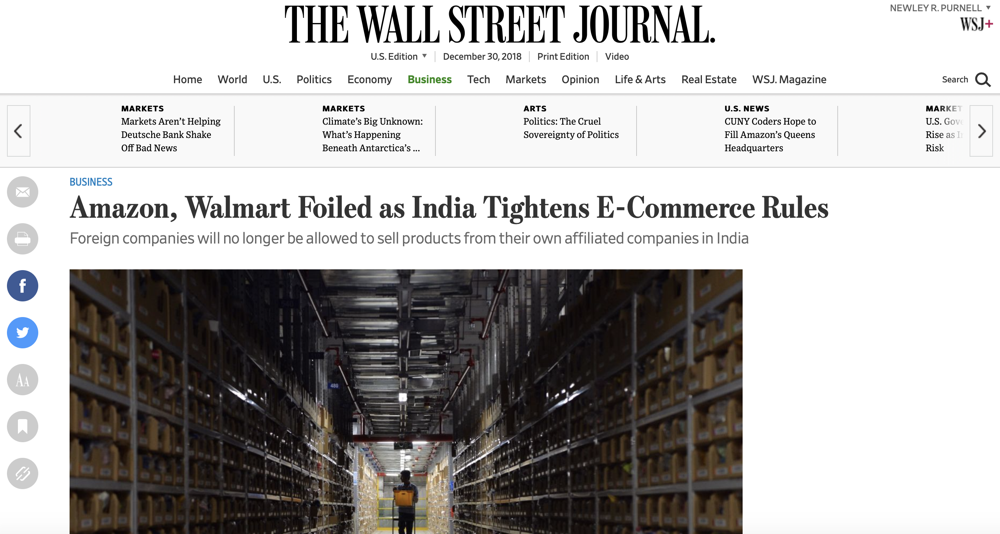
Amazon, Walmart Foiled as India Tightens E-Commerce Rules

Screen Shot 2018 12 30 at 1 18 39 PM

That’s the headline of a story I wrote Thursday with my colleague Corinne Abrams. It begins:

India is tightening restrictions on foreign e-commerce companies operating in the country, in a new challenge to Amazon.com Inc. and Walmart Inc. as they bet billions on the nascent market.

Current rules forbid non-Indian online sellers from holding their own inventory and shipping it out to consumers, as is typically done in other countries. Instead, the foreign sellers have found a work-around, selling online what are effectively their own products but held by their affiliated local companies.

Click through to read the rest.

We wrote more about the issue Friday in another story, which began:

American firms are plowing billions into India’s internet economy in part because, unlike China, India promised a level playing field for foreign firms to compete against local companies. Now that field may be tilting toward domestic startups amid a global backlash against U.S. tech titans, according to analysts and industry officials.

With national elections approaching early next year, India’s government said Wednesday it is tightening restrictions on foreign e-commerce players, the latest move in recent months that restrains their freedom to operate compared with local firms. The new rules present a fresh challenge to Amazon.com Inc. and Walmart Inc. as they aim for growing slices of a market where many of India’s 1.3 billion people are starting to shop online thanks to inexpensive smartphones and data.

Vinay Kesari, a Bangalore-based technology lawyer specializing in regulatory matters who has worked with U.S. tech firms, said such moves to rein in foreign tech companies have been highly unusual and may be a sign of more to come.

“I’ve never seen anything like this happening,” he said. “All bets are off at this point.”

Click through to read the rest.

Categories
India Journalism Tech

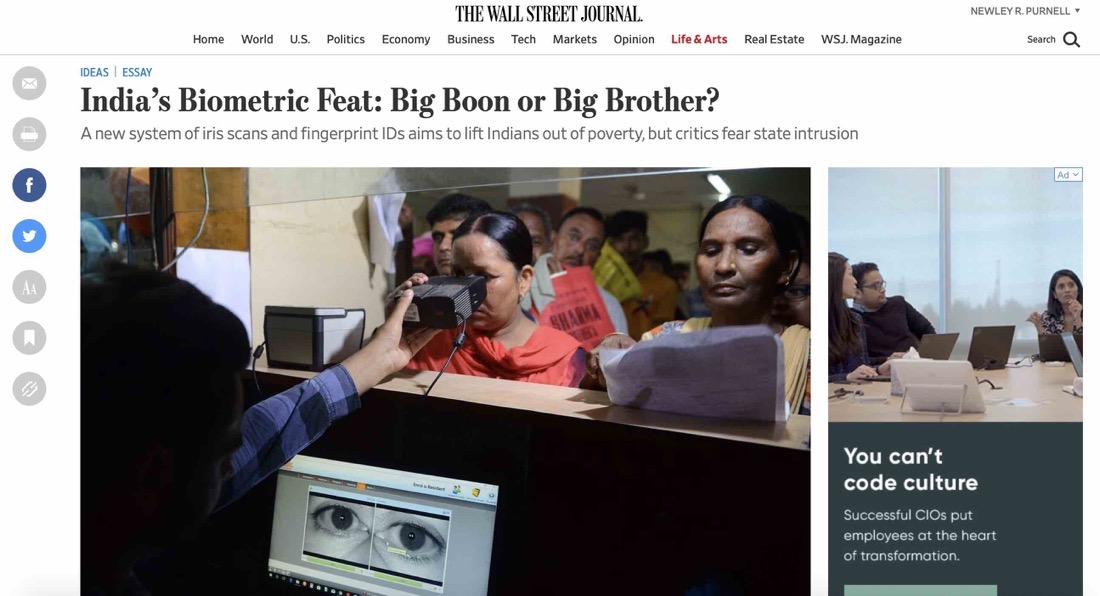
India’s Biometric Feat: Big Boon or Big Brother?

2018 12 23 aadhaar

That’s the headline of my most recent story, online here and in Saturday’s print Wall Street Journal.

It begins:

Last July, after virtually every adult in India was connected to the world’s biggest biometric identity database, one of the government officials behind it issued a challenge. R.S. Sharma, who oversees the country’s telecom regulatory agency, publicly disclosed his personal ID number in the system and taunted skeptics and potential hackers. “Show me one concrete example where you can do any harm to me!” he tweeted.

Opponents of the system swarmed, looking to show the dangers of having too much information amassed in one place. They scoured the internet for Mr. Sharma’s personal data by using the ID number to help open digital doors, and claimed some prizes: They uncovered his mobile number and a photo of his daughter and were able to deposit token amounts of money in his bank account. But they couldn’t withdraw funds or corrupt his data, and Mr. Sharma claimed to have proved that the system – which has on file the irises and fingerprints of all of its participants – is secure.

Mr. Sharma’s challenge reflects the tensions over India’s unique feat. It has reached near-completion just as objections to such giant concentrations of personal data have escalated elsewhere around the world, fueled by controversies surrounding Facebook and Google. Reetika Khera, an economist at the Indian Institute of Management Ahmedabad, calls the Indian system “big data meets big brother,” and she and others have aired what they see as its failings, from invasive information-gathering about those within it to dangerous consequences for stragglers left out.

India says its system—built to cover its 1.3 billion people, a sixth of the world’s population—heralds a new model for governments to marshal citizens’ data, ease digital pathways and fuel their electronic economies, especially in the developing world. India’s Supreme Court in September ruled that the program doesn’t violate citizens’ privacy rights, removing a huge shadow over the program. “It’s mind-boggling that a country like India has pulled it off,” said Anil Jain, a Michigan State University professor who studies biometrics.

Click through to read the rest.

Categories
India Journalism Tech

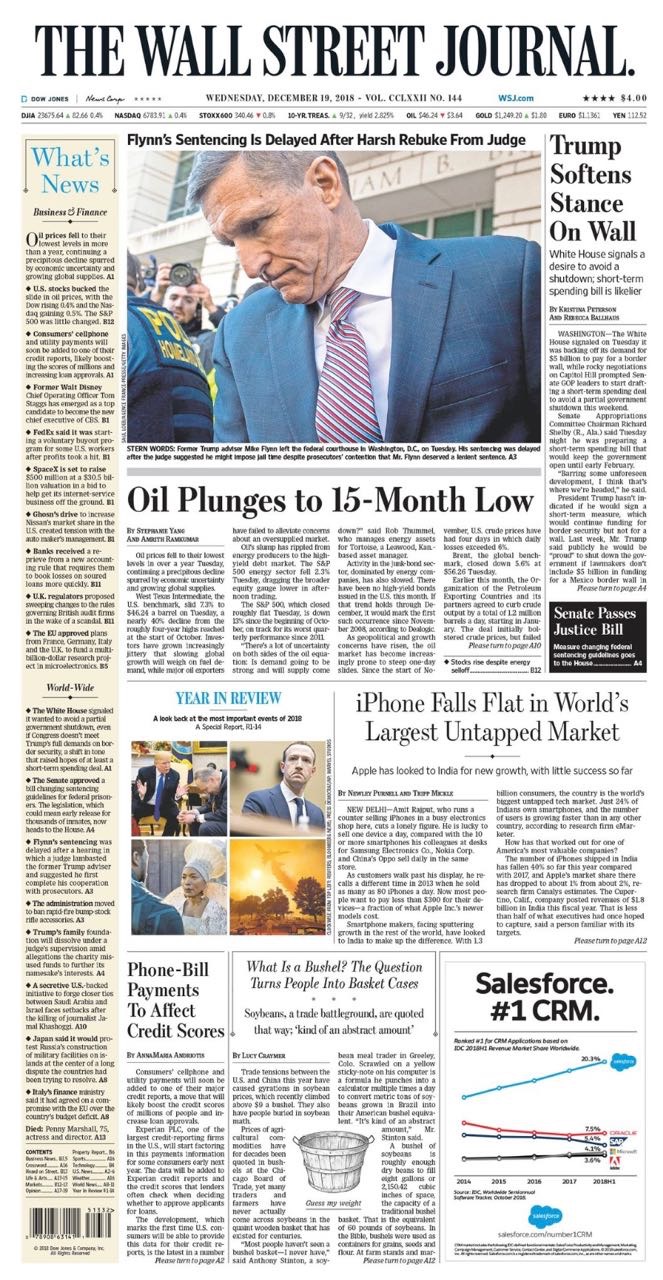
iPhone Falls Flat in World’s Largest Untapped Market

IMG 0364  1

That’s the headline of my most recent story, which I wrote with my WSJ colleague Tripp Mickle. It’s on the front page of Wednesday’s print paper and online here.

It begins:

NEW DELHI–Amit Rajput, who runs a counter selling iPhones in a busy electronics shop here, cuts a lonely figure. He is lucky to sell one device a day, compared with the 10 or more smartphones his colleagues at desks for Samsung Electronics Co. , Nokia Corp. and China’s Oppo sell daily in the same store.

As customers walk past his display, he recalls a different time in 2013 when he sold as many as 80 iPhones a day. Now most people want to pay less than $300 for their devices—a fraction of what Apple Inc.’s newer models cost.

Smartphone makers, facing sputtering growth in the rest of the world, have looked to India to make up the difference. With 1.3 billion consumers, the country is the world’s biggest untapped tech market. Just 24% of Indians own smartphones, and the number of users is growing faster than in any other country, according to research firm eMarketer.

How has that worked out for one of America’s most valuable companies?

The number of iPhones shipped in India has fallen 40% so far this year compared with 2017, and Apple’s market share there has dropped to about 1% from about 2%, research firm Canalys estimates. The Cupertino, Calif., company posted revenues of $1.8 billion in India this fiscal year. That is less than half of what executives had once hoped to capture, said a person familiar with its targets.

“It’s been a rout,” said Ishan Dutt, an analyst at Canalys.

Click through to read the rest.

Categories
India Journalism Tech

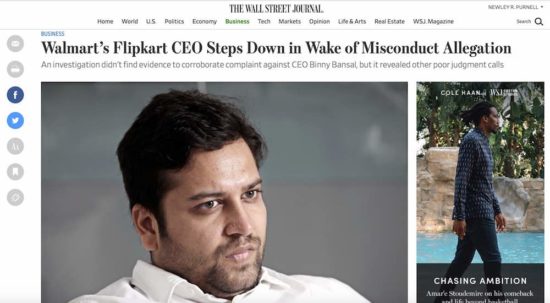
Walmart’s Flipkart CEO Steps Down in Wake of Misconduct Allegation

That’s the headline of my most recent story, which I wrote with my colleague Sarah Nassauer, out Tuesday.

It begins:

Walmart Inc. said the chief executive of Flipkart Group, its Indian e-commerce business, resigned following an independent investigation into a personal misconduct allegation.

Binny Bansal, one of the co-founders of Bangalore-based Flipkart, decided to step down after “recent events risked becoming a distraction,” Walmart said Tuesday.

Walmart opened an investigation this summer after a former Flipkart employee came forward alleging Mr. Bansal had sexually assaulted her sometime around 2016, according to a person familiar with the matter.

During the negotiations this year to sell Flipkart to Walmart, Mr. Bansal didn’t disclose the allegation against him or that he had hired security personnel to privately deal with the matter, the person said.

As part of the investigation, Mr. Bansal told Walmart he had a consensual relationship with the woman and denied he assaulted her, the person said.

Click through to read the rest.

Categories
India Journalism Tech

India’s Top Payments App Faces Challenge From Google and WhatsApp

That’s the headline of a story I did with my colleague Corinne Abrams, out Monday.

It begins:

India’s biggest mobile-payments startup, Paytm, has wooed hundreds of millions of users and attracted investment from Warren Buffett’s Berkshire Hathaway Inc.

The biggest challenge for its charismatic founder, 40-year-old Vijay Shekhar Sharma, lies ahead: Keeping Alphabet Inc.’s Google and Facebook Inc.’s WhatsApp at bay as they push into India, the world’s hottest new market for mobile money.

Paytm’s popular smartphone app, which can be used to pay for everything from auto-rickshaw rides to movies and utility bills, handles some 500 million transactions a month across its network. Paytm, launched in 2010 by Mr. Sharma’s One97 Communications Ltd., has dominated India’s payments space since late 2016. That is when Prime Minister Narendra Modi nullified India’s largest-denomination notes to curb corruption, triggering a cash crunch. Faced with long lines for ATMs, consumers flocked to the Paytm app.

Click through to read the rest.